Water extraction and removal
Removal of standing water from floors, carpets, and low spots using commercial extractors. The faster bulk water is removed, the easier it is to dry materials before they swell, delaminate, or stain.
Serving Denver, Colorado & surrounding areas
Fast water extraction, targeted drying, and clear next steps to limit damage after a leak, burst pipe, or indoor flooding.
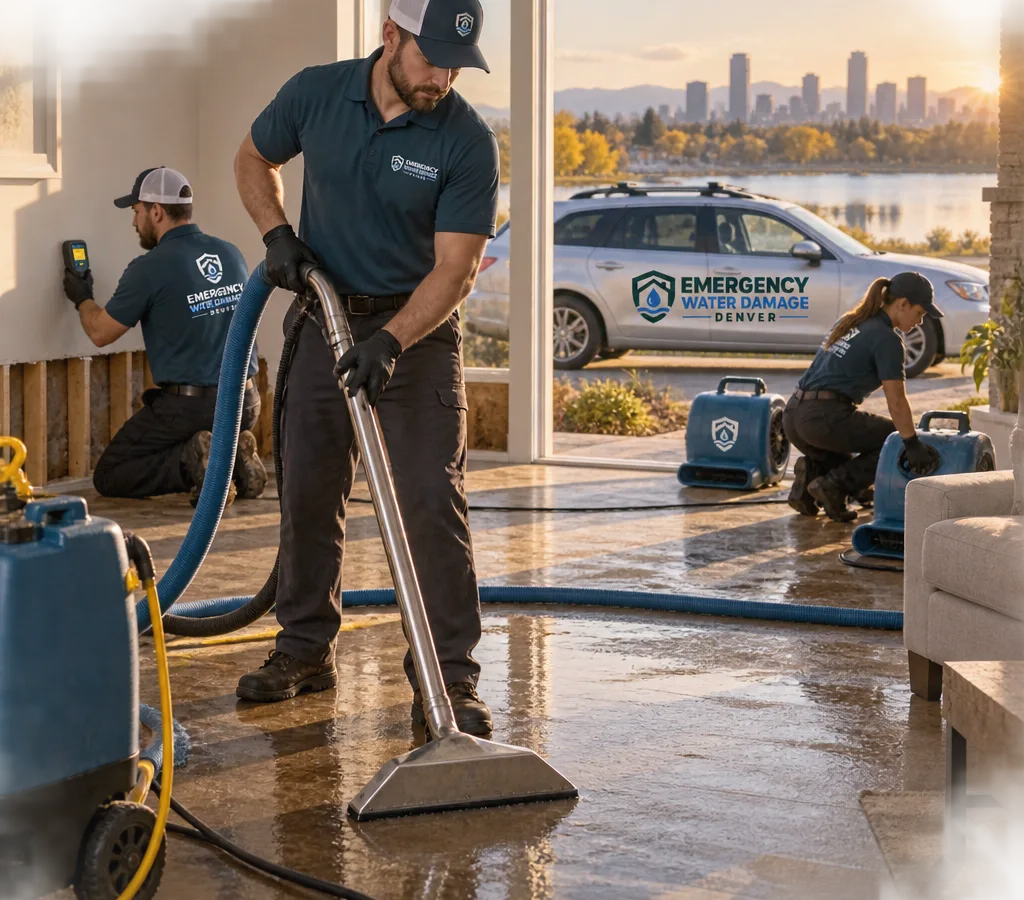
When water is spreading, the first goal is to stop further damage. Water removal in Denver usually starts with three practical priorities: (1) make the area safe around power, slip hazards, and contaminated water, (2) remove standing water as quickly as possible, and (3) dry what can be saved while documenting what cannot.
Emergency Water Damage Denver handles emergency water removal Denver property owners rely on when minutes matter. Our team focuses on extraction, drying, and cleanup with equipment sized for real-world conditions, from a single room with soaked carpet to a commercial space with water under flooring. You get a written scope, moisture readings, and a plan you can follow.
If you need emergency water damage specialists across the Denver area who can show up, triage the situation, and start removal work without turning the visit into a sales pitch, we are set up for that. Tell us what happened, what areas are affected, and whether the water is clean, grey, or potentially contaminated so we can bring the right gear.
Removal of standing water from floors, carpets, and low spots using commercial extractors. The faster bulk water is removed, the easier it is to dry materials before they swell, delaminate, or stain.
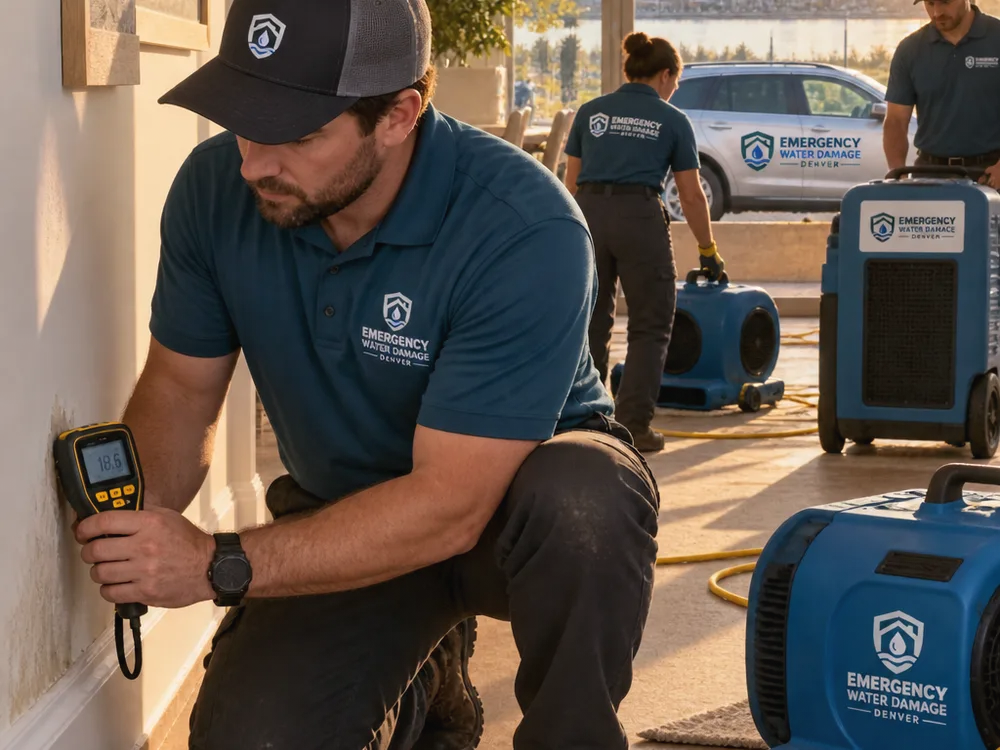
We check moisture in drywall, baseboards, framing, and subfloors with non-invasive and penetrating meters, then track drying progress so the work is based on readings, not guesswork.
Air movers and dehumidifiers are placed to move moisture out of materials. In some cases, controlled removal of wet baseboards or small drywall sections is the cleanest way to vent cavities and dry them correctly.
If water is dirty or there is a risk of spread, we set basic containment and handle debris removal tied directly to the water event, keeping the area workable and reducing cross-contamination.
You receive a clear scope, affected-area notes, and drying documentation that can help if you are coordinating with a property manager, insurer, or building maintenance team.
Water problems look similar everywhere, but the way we approach them changes based on building type and time of year.
In older neighborhoods like Capitol Hill and Congress Park, homes often have multiple flooring layers and finished basements where water can hide under carpet pad, behind baseboards, and inside wall cavities. In Washington Park and Platt Park, finished lower levels and tight utility spaces can make access tricky, so we plan equipment placement and drain paths before we start pulling water.
Winter brings its own urgency. Freezing weather can turn a small supply-line issue into a larger event if the source is not shut off quickly, and wet areas near exterior walls can stay cold and damp longer. Summer storms can push water into garden-level entries and garages, where it tends to pool and wick into drywall. The common thread is speed plus verification: rapid extraction, then measured drying so you are not left with moisture trapped where you cannot see it.
We start with what caused the water, whether the source is controlled, and whether electricity, HVAC, or contaminated water changes how we work in the space. If the water source is still active, stopping it is the priority.
We identify where water traveled, including adjacent rooms and below-grade spaces, then take baseline moisture readings on drywall, trim, flooring, and subflooring.
Standing water is removed first. If carpet and pad are saturated, we extract thoroughly and determine whether pad or carpet can be saved based on water category and condition.
We place air movers and dehumidifiers based on room geometry and readings. Where needed, we open small sections to dry cavities instead of trying to dry through layers.
Drying is not one-and-done. We recheck moisture, adjust equipment placement, and document progress until materials return to an acceptable dry standard for the situation.
Water removal in Denver typically ranges from about $500 to $2,500 for many residential situations, with larger losses and multi-room drying often reaching $3,000 to $8,000+ depending on how much water moved into floors and walls. A small, contained spill with quick extraction costs far less than a basement with saturated carpet, wet drywall, and multiple days of dehumidification.
Final pricing depends on the affected square footage, water category (clean vs contaminated), how long materials stayed wet, access (stairs, tight basements), equipment needs, and whether controlled removal of wet materials is required. The exact cost is confirmed after an on-site inspection and moisture mapping.
Call for Emergency Help“A supply line failed while we were out. They got the water out fast, explained what they were testing with the moisture meter, and kept checking back until the readings made sense. The written notes made it easier to coordinate with our insurance adjuster.”
“We had water under the flooring in a back room and it wasn't obvious until it started to smell damp. They found the wet areas, pulled the water, and set drying equipment where it actually mattered. Straightforward and professional.”
Emergency water removal should start as soon as the water source is stopped because materials can begin absorbing water immediately. In Denver homes with finished basements and layered flooring, water often spreads under carpet, pad, and baseboards, so quick extraction plus moisture mapping helps prevent hidden wet areas from lingering.
Shut off the water source if you can do so safely, avoid standing water near electrical outlets or panels, and move small valuables or electronics out of wet areas. If the water is clean, you can blot or towel obvious pooling, but avoid ripping out materials unless you are sure it is necessary because uncontrolled tear-out can make drying and documentation harder.
Sometimes, yes, but it depends on the water category and how long the carpet stayed wet. Clean water from a supply line caught quickly may allow salvage with thorough extraction and drying, while sewage-contaminated water typically requires removal of porous materials like pad, and often carpet, for health reasons.
We confirm dryness with moisture readings compared against unaffected areas and by tracking progress over time. Visual dryness is not enough because subfloors, drywall bottoms, and wall cavities can stay wet even when the surface looks fine, especially in below-grade rooms common around central Denver.
Yes. Emergency water removal Denver business owners request often involves priority access paths, minimizing downtime, and documenting affected materials for building management. We can extract water, set commercial drying equipment, and coordinate entry and work timing with managers and tenants.
Only when readings show moisture is trapped where airflow cannot reach it. Controlled removal of baseboards or a small flood-cut section of drywall can be the most efficient way to dry a wall cavity and reduce the risk of lingering moisture behind finished surfaces.
Yes. Stormwater and sewer backups can carry contaminants, which changes handling, containment, and what materials can be cleaned versus discarded. If the water is not clean, we treat it as a higher-risk situation and focus on protecting occupants and preventing spread before and during extraction.
If you have standing water, damp walls, or wet flooring, getting a documented removal and drying plan early is usually the difference between a manageable cleanup and a bigger rebuild.
Tell us what happened, what areas are wet, and when the water started. We will walk you through immediate safety steps, then schedule on-site water extraction and drying with clear documentation of what we find.
Call for Emergency Help