Stops spread to clean rooms
Containment and negative air reduce the chance that spores move through return air grilles, hallways, or shared walls while materials are being removed.
Serving Denver, Colorado & surrounding areas
Stop mold at the source with a clear scope, controlled containment, and verified cleanup that protects your home and indoor air.
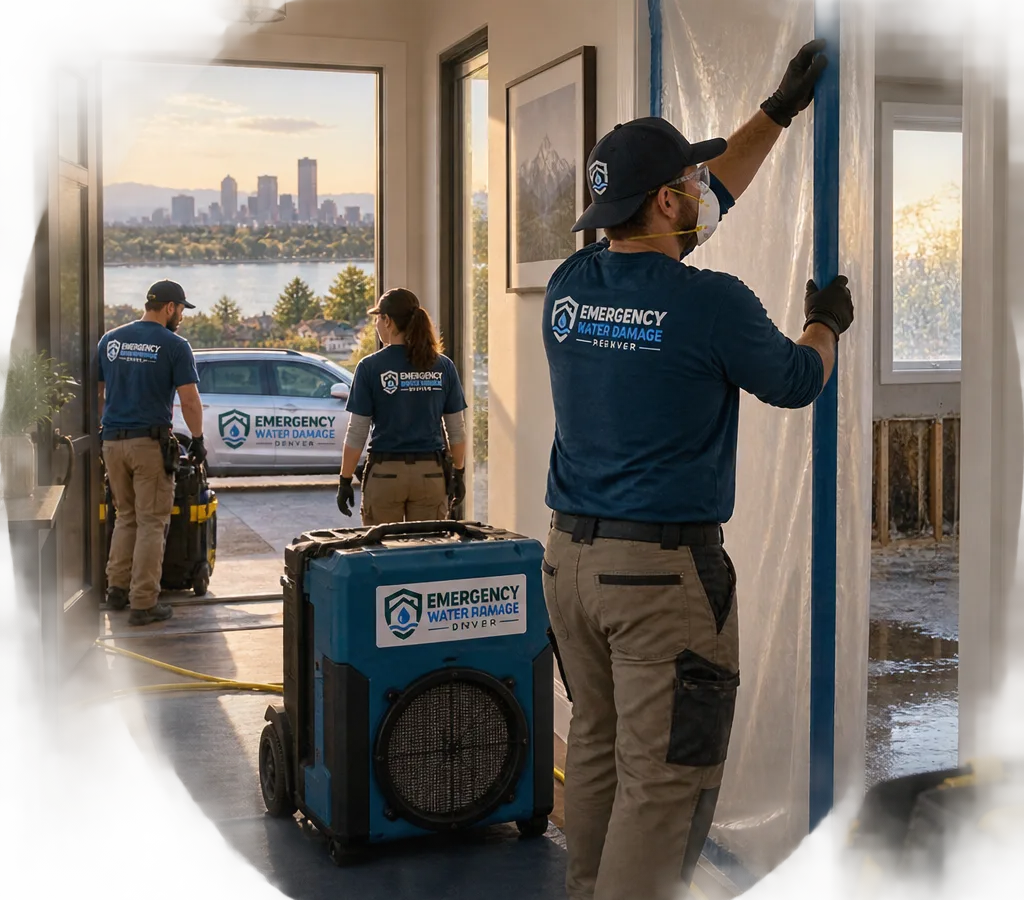
Denver mold remediation is effective only when the moisture problem is found and corrected, the work area is contained, and the cleanup is verified. If any one of those steps is skipped, mold can return in the same spot or spread to adjacent materials.
In Denver homes, we often see mold show up where moisture stays hidden: behind baseboards after a small plumbing leak, under carpet padding, around window sills with recurring condensation, or in basements and crawlspaces where humidity lingers. Older housing stock around neighborhoods like Capitol Hill and Congress Park can have more wall cavities and assemblies that hold moisture longer once water gets in, which changes how we set up access and containment.
Emergency Water Damage Denver handles mold inspection, containment, removal, and cleanup for residential and light commercial properties. When you work with our emergency water damage team throughout Denver, CO, you get a written plan for what gets removed, what gets cleaned, and how we confirm the space is safe to put back together.
A proper remediation is more than spraying a chemical. It is controlled demolition where needed, detailed cleaning, and preventing cross-contamination.
Typical scope elements include:
If the mold is tied to a one-time event like a pipe leak, acting quickly matters because porous materials can support growth when they stay damp. If you are in a time crunch, we can coordinate the remediation so other repairs can proceed without spreading contamination.
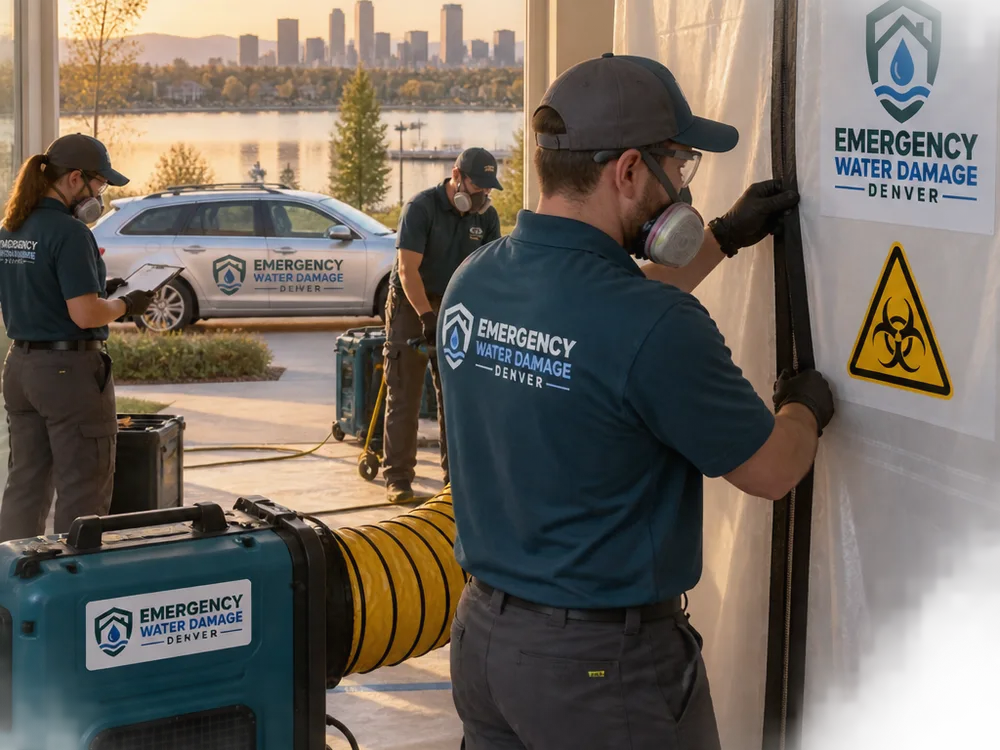
Containment and negative air reduce the chance that spores move through return air grilles, hallways, or shared walls while materials are being removed.
We prioritize removing or treating moisture-damaged porous materials and drying the structure, because paint or odor cover-ups do not fix the substrate.
Rowhomes, older plaster walls, and finished basements can require different access cuts and staging so we can reach the full affected cavity safely.
HEPA filtration and careful bag-out protect common areas, especially when remediation is near bedrooms, kitchens, or high-traffic entries.
You should know what comes out, what stays, and what the next steps are before work starts, including any rebuild coordination after remediation.
We identify affected materials, likely moisture sources, and what access is needed. You get a clear plan for containment, removal, and cleaning.
We isolate the work zone with poly barriers, establish controlled entry, and set HEPA air filtration when needed for negative pressure.
Materials like wet drywall, insulation, carpet pad, or heavily contaminated ceiling tiles are removed and bagged out in a controlled way.
We HEPA vacuum, damp-wipe, and clean remaining structural components. Where appropriate, we apply industry-accepted antimicrobial products after physical removal.
We verify the area is dry and visibly clean so reconstruction can move forward. If additional drying is needed, we outline what it will take and why.
Denver mold remediation typically ranges from about $1,500 to $6,000 for many residential jobs, with small, contained areas sometimes closer to $800 to $2,000 and larger or multi-room projects reaching $8,000+ when demolition, containment, and detailed cleaning expand.
Your final price depends on the size of the affected area, what materials are involved (drywall and insulation raise labor and disposal), how hard it is to access wall cavities or attic spaces, and whether negative air containment is required. The exact cost is confirmed after an on-site inspection and a written scope.
Call for Emergency Help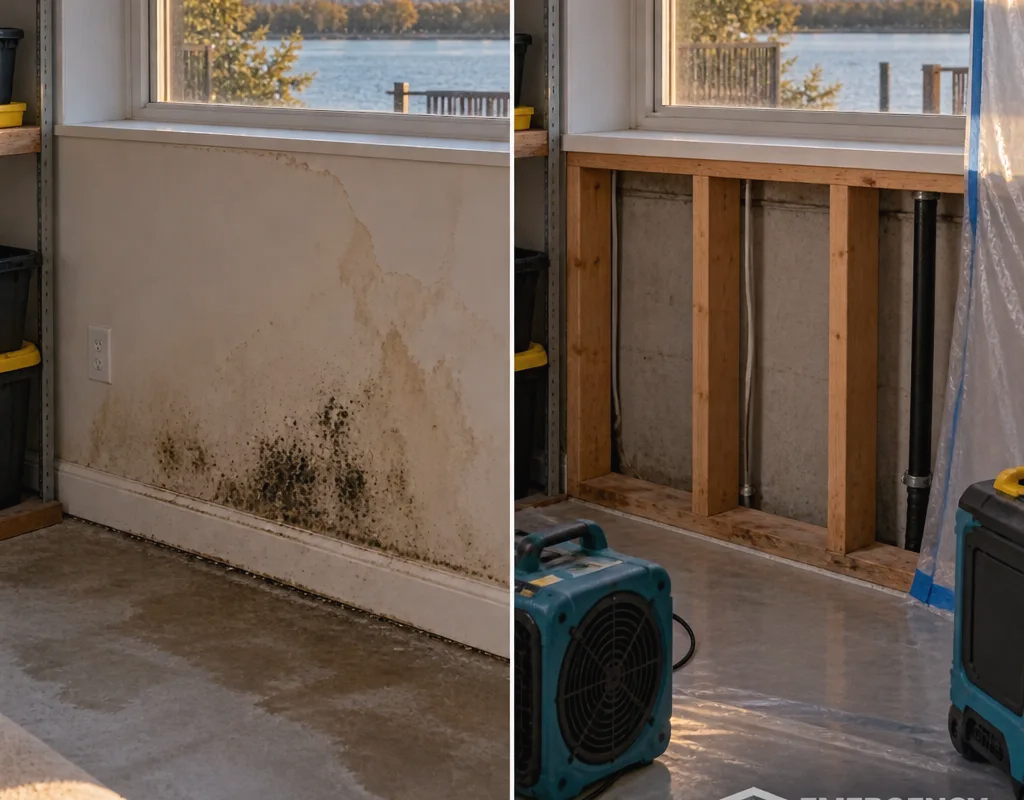
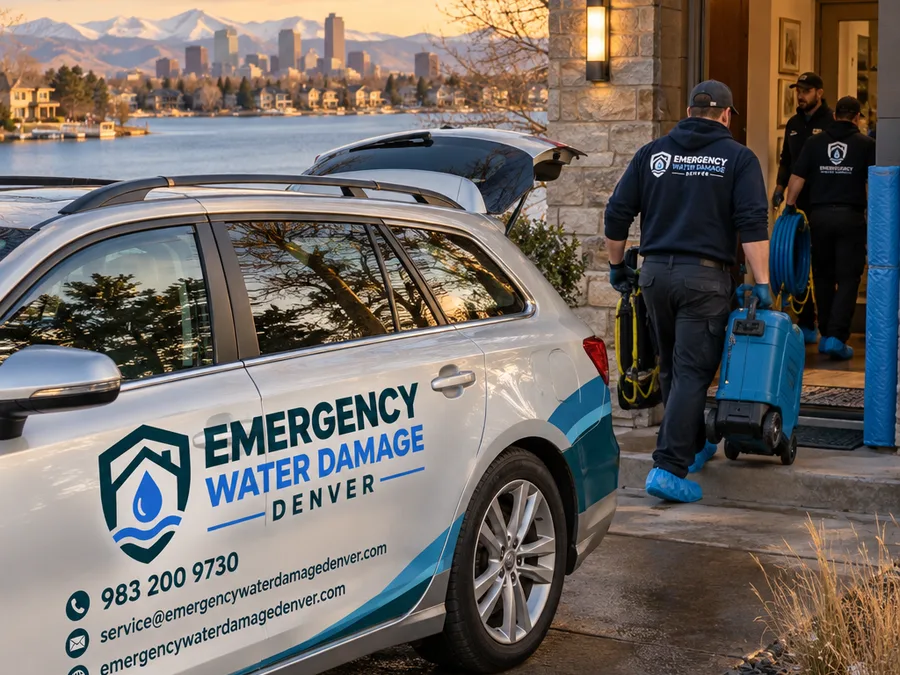
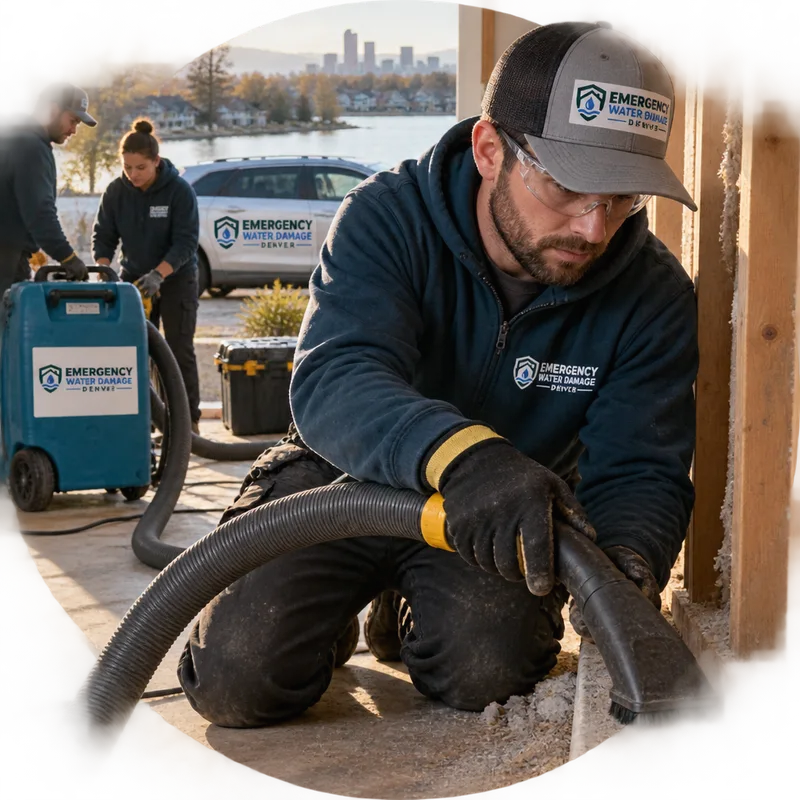
If you smell a persistent musty odor, see staining that keeps returning, or had a leak that soaked drywall or carpet, get an inspection before the damage spreads behind finished surfaces.
Many projects can start quickly once we've completed an inspection and defined containment and access, because the first goal is to stop further spread and remove damp materials that are feeding growth. If you recently had a leak or overflow, acting sooner can reduce how much drywall, insulation, or flooring needs to be removed.
Drywall often needs selective removal when mold is on the paper face or inside the wall cavity, because drywall is porous and is difficult to clean reliably once contaminated. If the issue is limited to a non-porous surface and the material underneath is dry and unaffected, removal may be minimal, but that is confirmed during inspection.
Cleaning addresses what you can see, while remediation controls the work area, removes unsalvageable porous materials, and cleans remaining surfaces with HEPA methods so spores are not spread during the work. A remediation plan also accounts for the moisture source, because without drying and correction, mold commonly returns.
It depends on where the affected area is and how containment is set up, but many occupied homes can remain in place when the work zone is isolated with barriers and HEPA filtration. If the affected area is near bedrooms, HVAC returns, or main walkways, we may recommend limiting access to certain zones until cleaning and verification are complete.
Air testing is not required for every remediation, but it can be useful for clearance verification or when symptoms persist without visible growth. If testing is part of your plan, it should be scheduled at the right time: after cleaning, with the containment removed or in the configuration required by the testing protocol.
The most common triggers are water intrusion and chronic moisture: small plumbing leaks behind cabinets, roof or flashing issues, wet basements after seepage, and repeated condensation at windows or poorly ventilated bathrooms. Even in a generally dry climate, a single hidden leak can keep materials damp enough for growth if it is not found and corrected.
Tell us what you're seeing and where it's happening. We'll inspect the area, identify the moisture driver, and provide a written scope for containment, removal, and cleanup so you can move forward with confidence.
Call for Emergency Help