Thorough moisture mapping
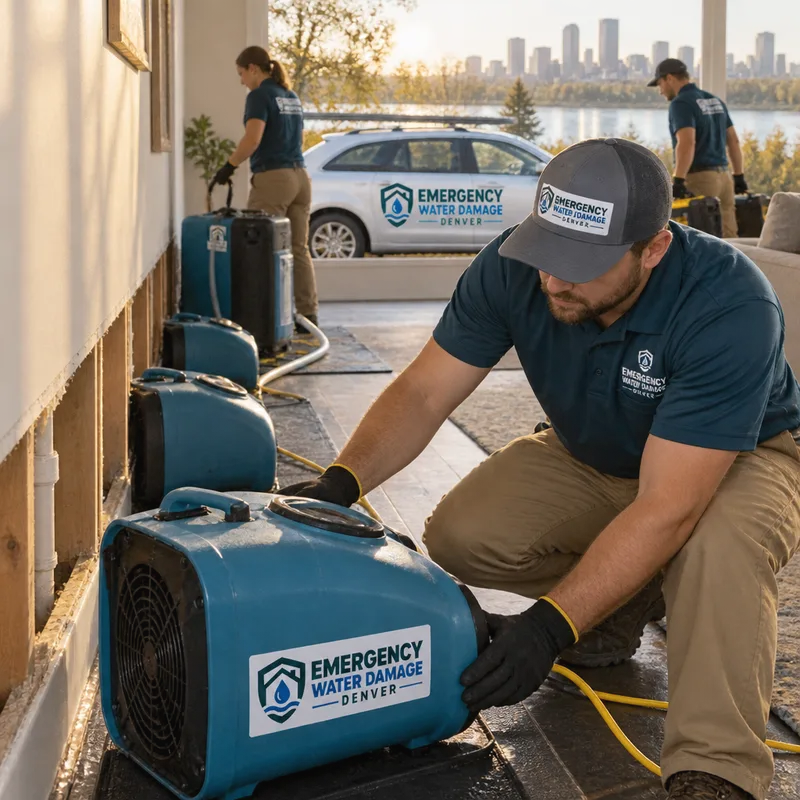
We check behind baseboards, inside cavities, and under flooring where water commonly hides, then set drying equipment based on readings, not guesswork.
Serving Denver, Colorado & surrounding areas
Fast dry-out, careful cleanup, and repair planning for residential water damage, with clear documentation from the first visit.
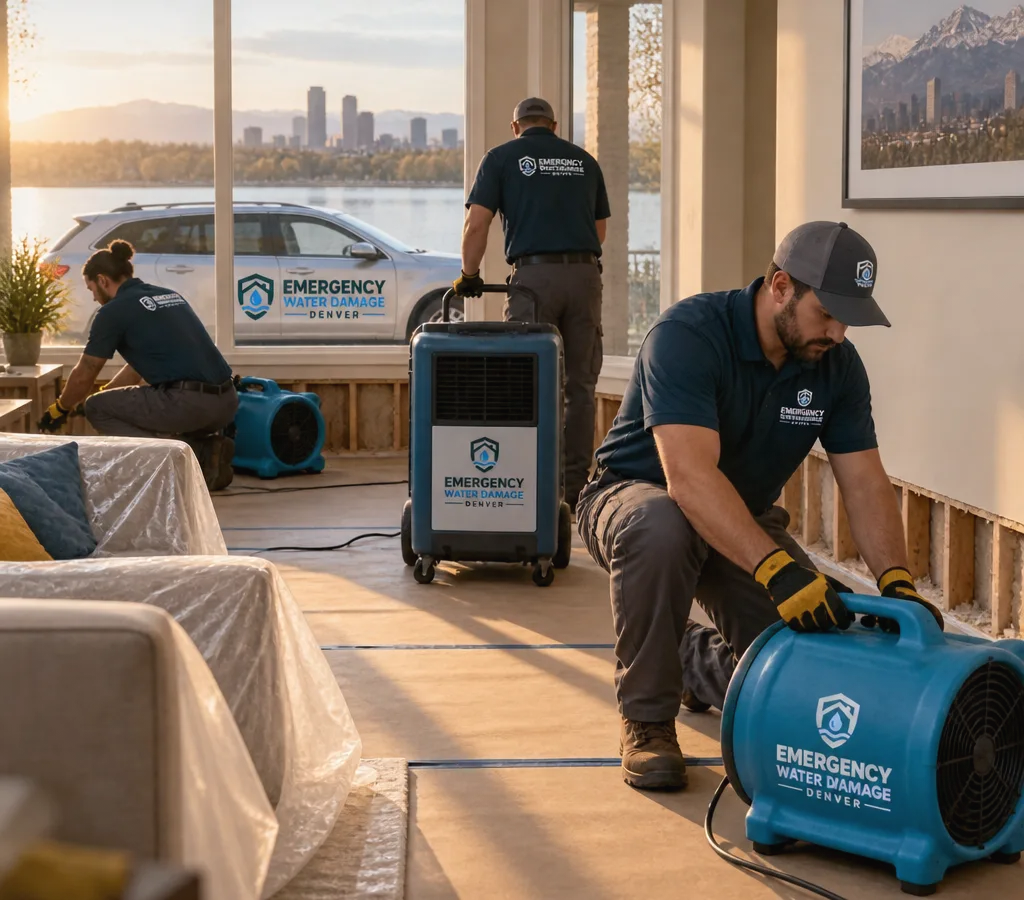
When a pipe bursts, a water heater fails, or a sink overflows, the first priority is stopping the spread. The second is drying the structure correctly so you do not end up with hidden moisture in walls, subfloors, or insulation. Emergency Water Damage Denver provides water damage restoration Denver homeowners can rely on for a practical plan: inspect, extract, dry, clean, document, and only then rebuild.
Denver housing varies block by block, so the approach has to match the construction. Older homes in Washington Park and Congress Park often have plaster walls and layered flooring that can hold moisture longer than you would expect. Highlands and Sloan's Lake have a mix of remodels and additions where water can travel between old and new assemblies. In areas with more slab-on-grade construction, moisture can wick under flooring and show up later at edges and seams. We focus on finding where the water actually went, not just where you can see it.
As a professional emergency water damage company in Denver, our work starts with a written scope and moisture readings you can understand. If you are coordinating with insurance, we also capture the photos, notes, and drying logs that help support your claim.
We check behind baseboards, inside cavities, and under flooring where water commonly hides, then set drying equipment based on readings, not guesswork.
Clean water from a supply line is handled differently than contaminated water from a backup. We explain the category and the cleanup steps it requires.
If wet drywall or insulation cannot dry in place, we remove only what is necessary to open airflow paths and prevent long-term odor and microbial growth.
We document conditions and progress so you have a clear record of what was wet, what was removed, and when the structure reached dry standards.
Once drying is complete, we can outline the repair steps so you know what comes next, what can be reused, and what should be replaced.
A proper water restoration job is more than vacuuming up water and placing a fan in the room. Denver water damage restoration typically includes several phases, and skipping one usually shows up later as cupped flooring, swollen trim, stains, or persistent musty odor.
Inspection and safety: We identify the water source, shutoff needs, electrical concerns, and any materials that should be treated as unsalvageable.
Extraction and removal: Standing water is extracted first. If the carpet pad is saturated, it often needs removal so the subfloor can dry. Baseboards may be removed to allow airflow behind drywall.
Structural drying: We set air movers and dehumidifiers based on the size of the wet area and the affected materials. Drying is verified with moisture readings over multiple visits.
Cleaning and odor control: Surfaces are cleaned and sanitized as appropriate to the water category. If contamination is involved, we use containment and proper disposal methods.
Repair coordination: After drying, we can help plan repairs and coordinate the handoff so rebuild work does not start over wet materials.
If you also need help with contamination concerns after a water loss, mold remediation in Denver may be appropriate once the moisture problem is stabilized.
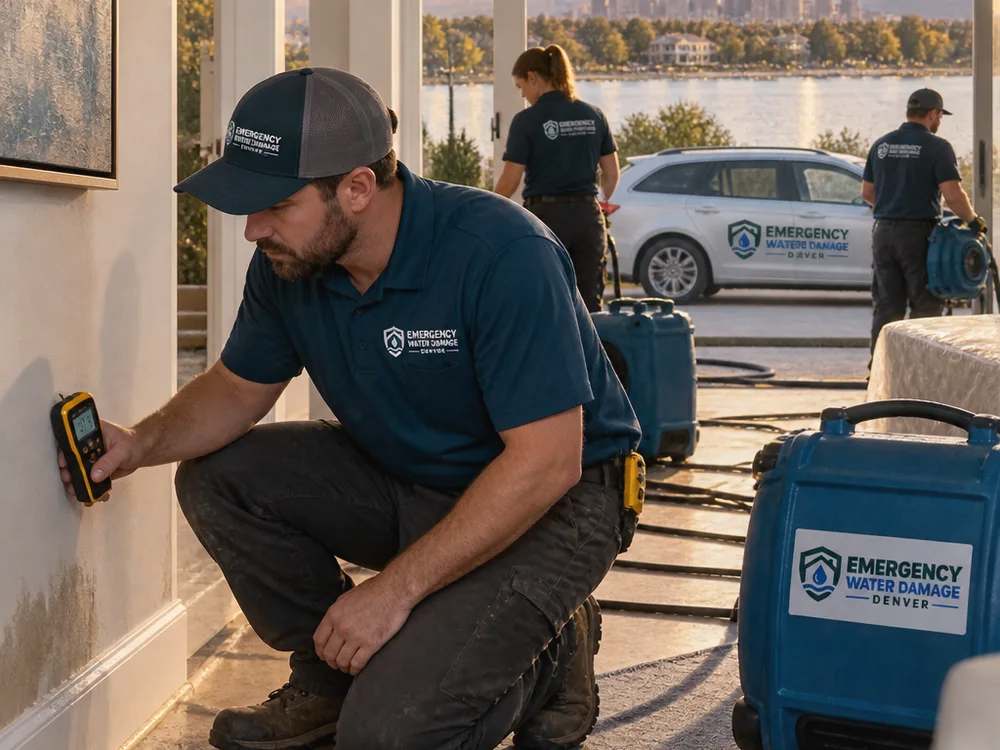
We inspect the affected areas, determine water category, and map moisture in floors, walls, and adjacent rooms to define the true drying footprint.
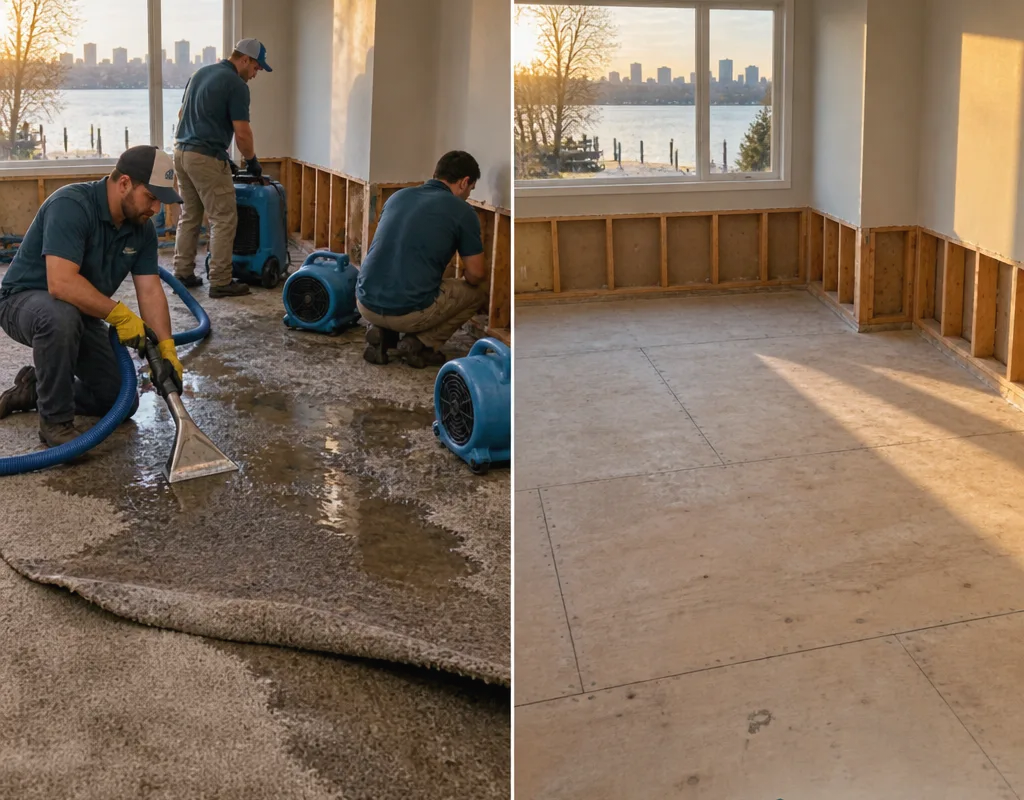
We remove standing water and pull materials that cannot dry correctly in place, such as saturated pad, swollen trim, or wet insulation when required.
Air movement and dehumidification are sized to the materials involved—hardwood, drywall, framing, or concrete. We protect floors and contents as we stage equipment.
We return to record humidity and moisture readings, adjust equipment, and document progress. Drying is complete when readings stabilize at dry standards.
After drying, we clean affected surfaces and provide a straightforward outline of what repairs are needed so rebuild starts on dry, stable materials.
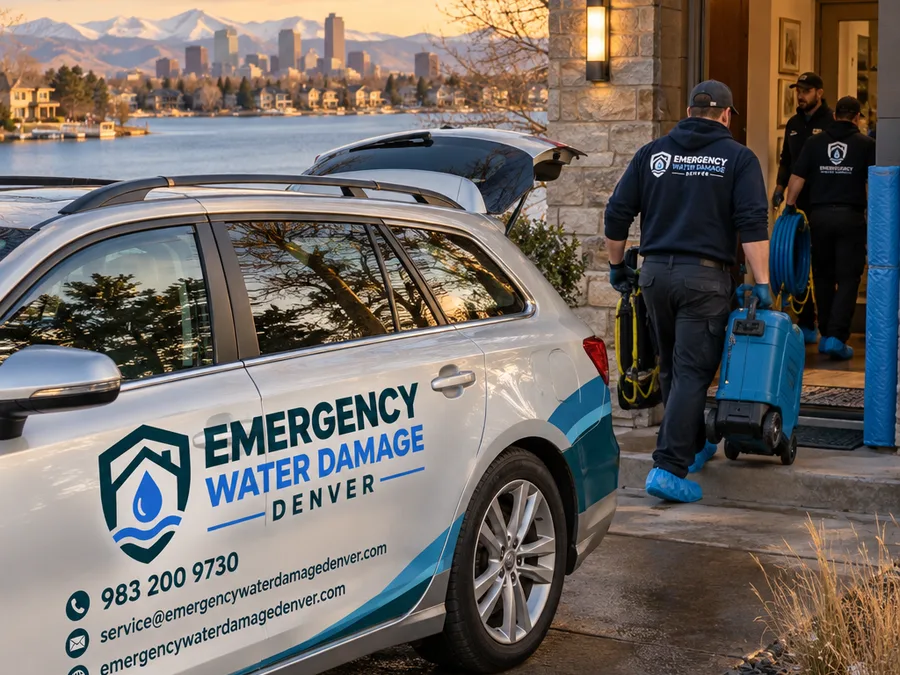
Water damage restoration in Denver typically ranges from about $1,200 to $6,500 for residential losses, with small, contained clean-water events at the low end and larger multi-room losses—or contaminated water—at the high end. Extensive tear-out and reconstruction costs are separate from drying and cleanup.
Final price depends on the affected square footage, water category, how long materials stayed wet, what must be removed such as pad, drywall, or insulation, equipment days, and access. Finished basements and tight mechanical rooms can take longer. Exact cost is confirmed after an on-site inspection and moisture mapping.
Call for Emergency Help“We had a supply line leak that soaked the kitchen and part of the basement ceiling. They explained what had to come out, documented everything for insurance, and the drying checks made us feel confident the framing was actually dry.”
“What I appreciated most was the straight talk. They showed me the moisture readings, adjusted the equipment after the first day, and didn't rush the repair step before the place was ready.”
Start restoration the same day whenever possible because moisture spreads under flooring and into wall cavities quickly. Even if visible water is gone, materials like drywall, insulation, and hardwood can hold moisture that leads to swelling, staining, and odor if drying is delayed.
Yes, finished basements are a common residential water damage restoration need in Denver, especially when water travels under carpet and behind baseboards. The key is opening airflow paths—often by removing pad or baseboards—and verifying dry-out with moisture readings, not surface feel.
Sometimes, but it depends on how much water got under the boards, how long it sat, and the floor type. We assess moisture levels and movement such as cupping or buckling and then recommend drying steps. In some cases boards can be dried and refinished, and in others replacement is the realistic option.
Clean water comes from a sanitary source like a supply line, while contaminated water can include dishwasher backflow, sewer backups, or other sources with bacteria. Contaminated water requires stricter containment, cleaning, and disposal steps, and it can change what materials are considered salvageable.
Yes, we document moisture readings, affected materials, equipment placement, and drying progress so there is a clear record of what happened and what work was performed. That documentation is often useful when you are communicating scope and timelines with an adjuster.
Drying and cleanup come first, and repairs are planned once the structure meets dry standards. If you need a full start-to-finish plan, we can outline repair steps and sequencing so rebuild work starts on dry, stable materials and avoids rework.
Tell us what happened and what areas are affected. We will schedule an on-site assessment, map the moisture, and provide a written scope for drying, cleanup, and the next steps for repairs.
Call for Emergency Help