Supply line and fixture leaks
Failures at sinks, toilets, washing machines, dishwashers, and ice maker lines often soak cabinets and subfloors before anyone sees it.
Serving Denver, Colorado & surrounding areas
Fast cleanup, professional drying, and a clear plan to prevent hidden moisture from turning into bigger damage.
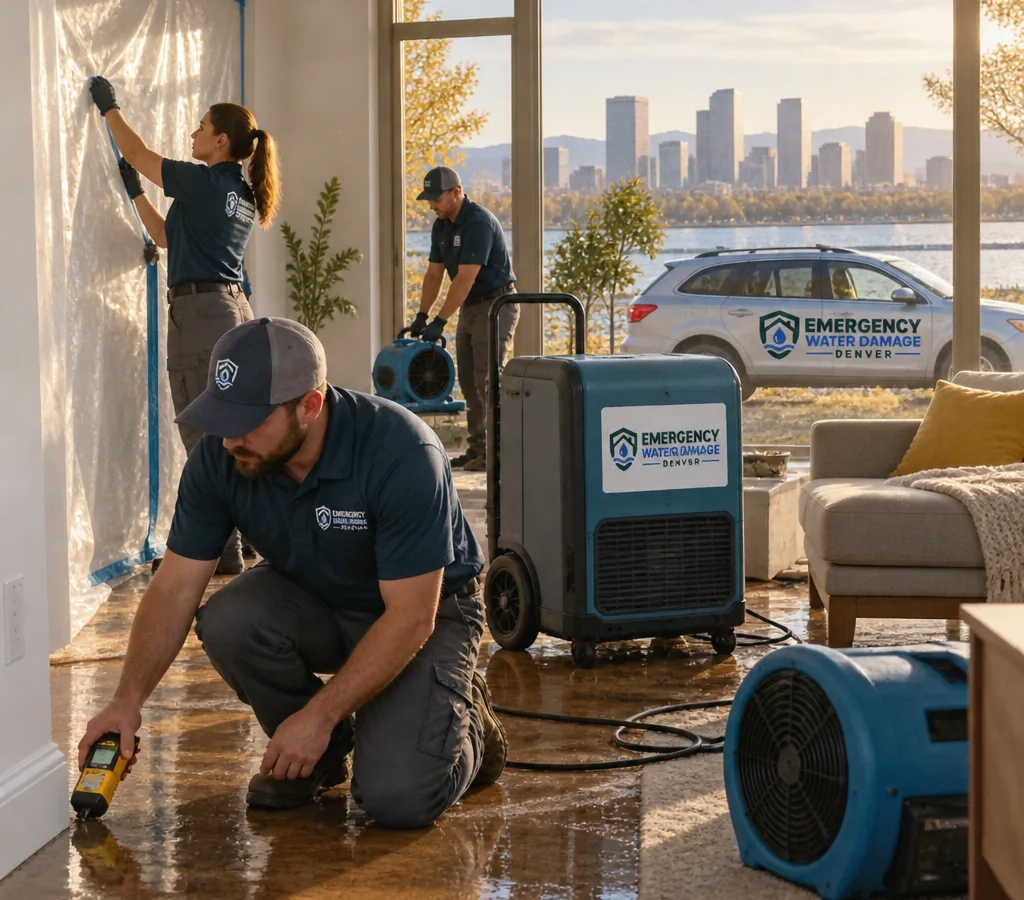
Water damage moves quickly. In the first hours, water can wick into drywall, swell baseboards, soak subflooring, and travel under floating floors. In Denver, forced-air heat and low indoor humidity can dry the surface fast while moisture stays trapped deeper in materials. That is how a small leak turns into warped flooring, stained ceilings, and odor that will not go away.
Our work focuses on the full remediation process: identifying where the water traveled, removing water and damaged materials when needed, setting up professional drying, and verifying dryness with moisture readings before the space is closed back up. Emergency Water Damage Denver is an emergency water damage company across the Denver area providing water damage remediation for homes, condos, and light commercial spaces.
If you are in neighborhoods with a mix of older and newer construction, water paths can vary. In Capitol Hill and Congress Park, older plaster walls, layered flooring, and tight chases can hide damp areas. In Lowry and Stapleton/Central Park, finished basements and engineered flooring can trap water under underlayment. In Baker and Wash Park, many homes have multiple remodel layers, which makes it easy for moisture to get into cavities you cannot see. A good plan starts with finding the real wet footprint, not guessing from the visible spot.
Water damage remediation in Denver should be built around measurement and documentation, not just fans in a room. After a source is stopped, the priorities are to remove standing water, protect unaffected rooms, and start drying the structure in a controlled way.
Typical scope elements include:
If your situation includes sewage or other contaminated water, remediation steps change. Materials like carpet pad, insulation, and porous drywall often cannot be salvaged, and PPE and containment become more important. The water category drives the method, and the method drives what can safely stay.
When you request Denver water damage remediation, ask how the team confirms dryness before rebuild. A professional answer includes moisture readings, a drying log, and a clear explanation of what was removed and why.
Failures at sinks, toilets, washing machines, dishwashers, and ice maker lines often soak cabinets and subfloors before anyone sees it.
Tank failures can dump a large volume fast, especially in basements and mechanical rooms where water spreads under walls.
Clogged condensate drains and pan overflows can quietly wet drywall, ceilings, and insulation over time.
Wind-driven rain and flashing issues can wet attic insulation and run along framing, showing up far from the entry point.
Poor drainage, cracks, or runoff near foundations can wet flooring and lower-wall materials, particularly after heavy rain events.
Recurring moisture at siding, window wells, and door thresholds can damage framing and create persistent odors inside.
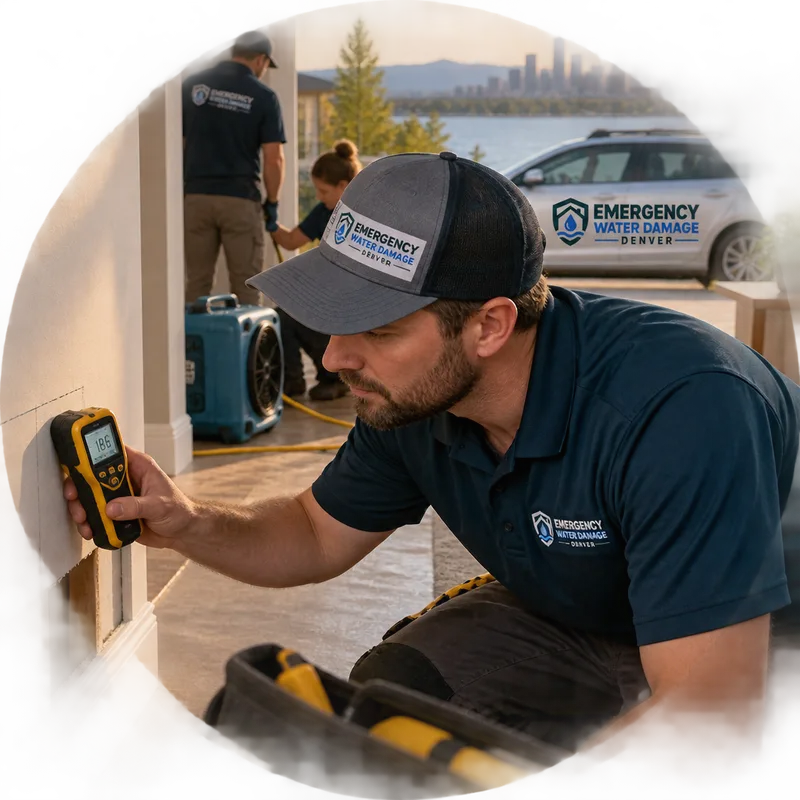
We start by confirming the water source is controlled, then map the affected area with moisture readings. You get a plain-language explanation of what is wet, what is likely dry, and what we need to open up to be sure.
We set floor protection and, if needed, containment to keep dust and humidity from spreading. In multi-unit buildings, this step also helps reduce the risk of moisture migrating to adjacent walls.
We remove standing water and pull materials that cannot dry safely in place, including swollen MDF trim, saturated pad, and wet insulation. Drywall cuts are made to allow airflow into cavities when required.
Air movers and dehumidifiers are placed and adjusted to the space and materials. We monitor progress using moisture meters rather than judging by touch, because surfaces can feel dry while framing is still wet.
When the water category and condition call for it, we clean affected surfaces and use appropriate antimicrobial products. If odor is present, we address the source material first, then consider targeted deodorization.
Before rebuild starts, we confirm the structure has returned to an acceptable dryness range and provide documentation of what was done, what was removed, and the readings that support closure.
Water damage remediation in Denver typically ranges from about $1,500 to $7,500+, with small, contained cleanups often closer to $1,500 to $3,000 and larger losses with material removal and multi-day drying often $4,000 to $7,500 or more. If contamination is involved, costs usually rise because more porous materials must be removed and safety controls increase.
Final pricing depends on the size of the wet area, water category, how far moisture traveled into walls and floors, access, and how many days of drying and monitoring are required. The exact scope and cost are confirmed after an on-site inspection and moisture mapping.
Call for Emergency Help“We thought the leak was only under the kitchen sink, but the moisture readings showed it had traveled under the flooring. The crew opened up the right areas, dried it properly, and explained what they were doing each visit.”
“Basement carpet was soaked after a water heater failure. They extracted water the same day, set up drying equipment, and kept checking moisture until it was ready for repairs. The documentation made the next steps straightforward.”
For water damage remediation Denver CO homeowners can trust, you want a team that can explain decisions, not just perform tasks. Ask how they determine the boundaries of the wet area, what tools they use to verify drying, and what materials they expect to remove. Moisture mapping, drying logs, and clear cut lines for drywall are signs of a measured approach.
Also ask how they handle multi-unit situations and shared walls. In condos and townhomes around areas like Cherry Creek and Uptown, water can move through party walls and down chases. A remediation plan should include checking adjacent surfaces when there is a reasonable path, and documenting what was inspected.
If repairs are part of your next step, keep the remediation scope and the rebuild scope separate in your mind. Remediation is about making the structure clean and dry. Repair is about putting finishes back. Even when one contractor can coordinate both, the drying verification should stand on its own.
You should start remediation as soon as the water source is stopped, ideally the same day, because moisture wicks into drywall, trim, and subfloors quickly. Early extraction and controlled drying reduce how much material needs to be removed and help prevent odor and microbial growth. Even if surfaces look dry in Denver's typically dry indoor conditions, moisture can remain in cavities, which is why moisture readings matter.
Not always, but drywall is often removed when water has entered the wall cavity or insulation is wet. If moisture readings stay high behind the surface, opening the wall at a clean cut line allows airflow and dehumidification to dry framing properly. If the water was contaminated, porous drywall is more likely to be removed for safety.
Most structural drying takes about 3 to 5 days, but it can be shorter for small, well-ventilated areas and longer when water reached insulation, multiple rooms, or a finished basement. Drying time depends on material type, thickness, and how much moisture is in framing and subfloor. A drying plan should be driven by daily moisture checks, not a guess.
Yes, but the approach depends on the floor type and how much water is trapped underneath. Laminate and many engineered products often swell and may need partial removal to dry the underlayment and subfloor. Some hardwood situations can be dried in place with the right equipment and monitoring, but cupping, buckling, and persistent high readings are signs that sections may need to be lifted.
Yes, we can provide photos, moisture documentation, and a written scope so the claim has clear support. Insurance decisions vary by policy and loss type, but thorough documentation of affected materials, drying equipment, and monitoring days helps the process move faster. If you are unsure what to report, start with what happened, when it happened, and what areas were affected.
The difference is the level of contamination and the required safety and removal steps. Clean water comes from a sanitary source like a supply line, while contaminated sources like sewage require stricter containment, PPE, cleaning, and usually more removal of porous materials. When in doubt, treat unknown water as potentially contaminated until it is identified.
Tell us what happened, what areas are wet, and when the water started. We will schedule an inspection, map the moisture, and give you a written scope with the next steps to get the structure clean and dry.
Call for Emergency Help