Containment and safety controls
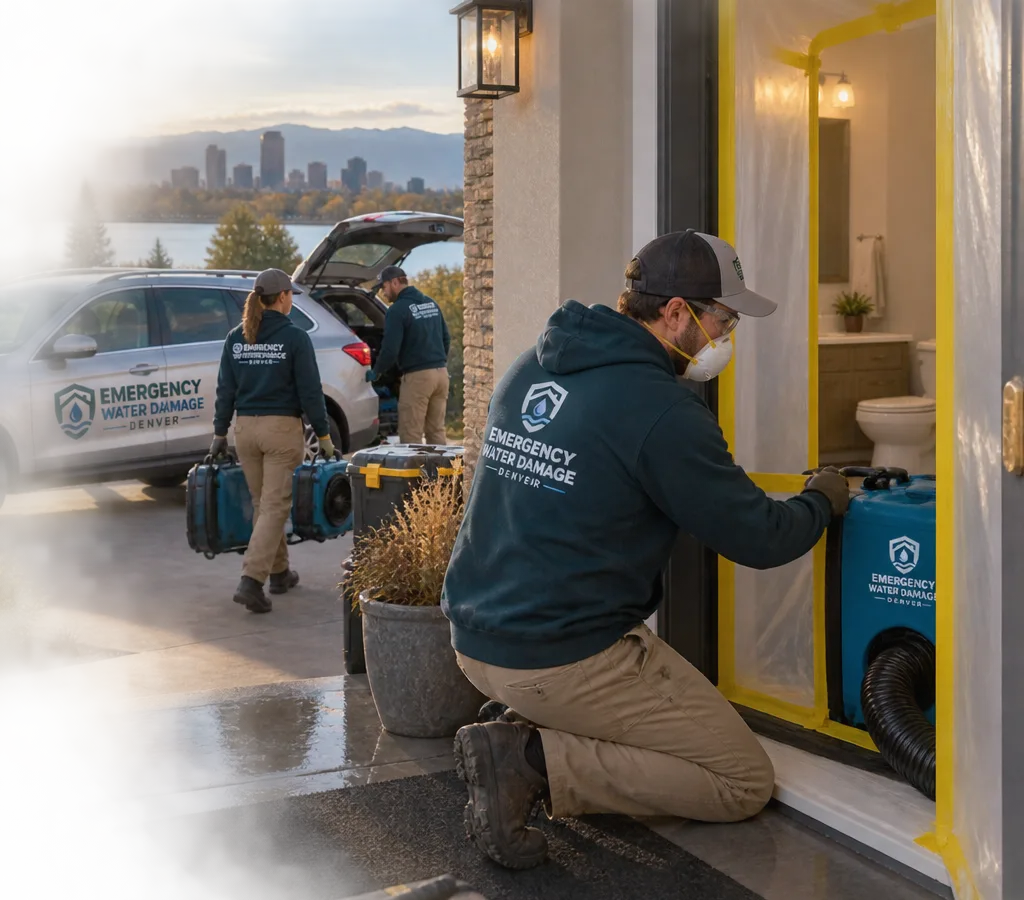
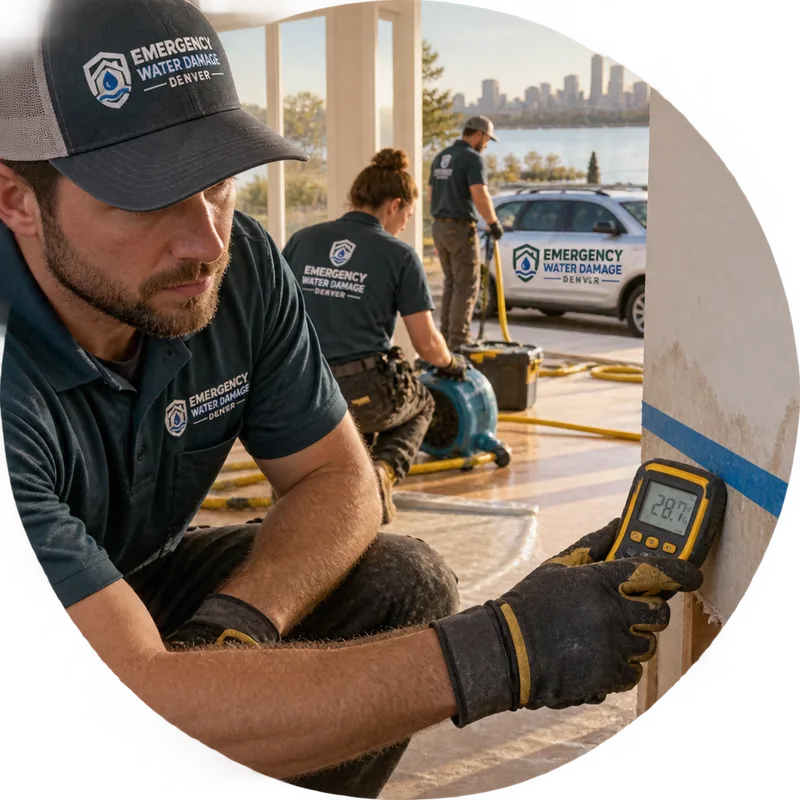
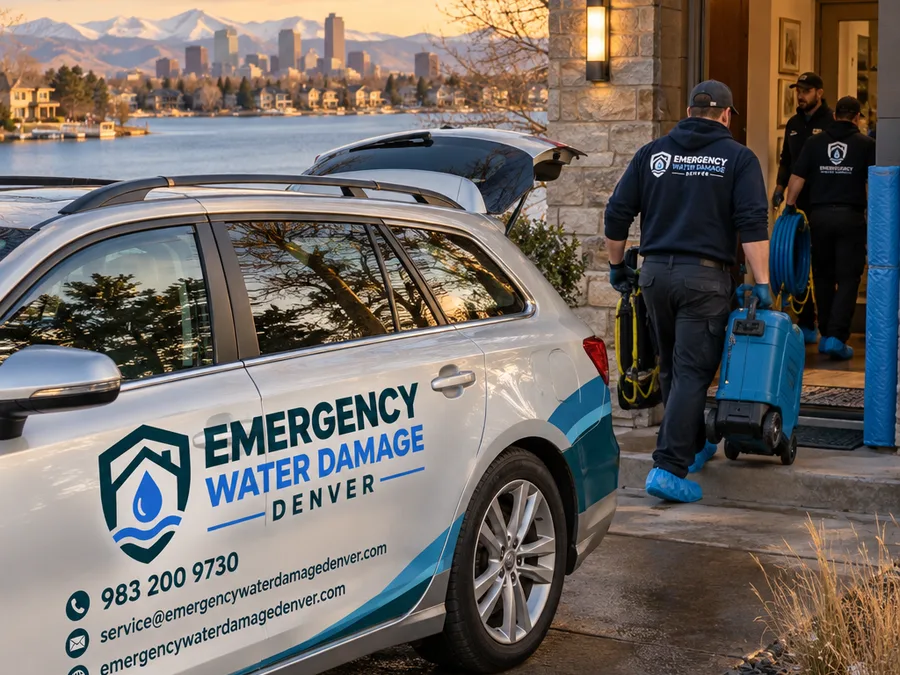
We isolate the affected area with plastic barriers and negative air where needed, then use PPE and safe pathways to keep contaminants from spreading to clean rooms.
Serving Denver, Colorado & surrounding areas
Sewage backups are a health hazard. We contain the contamination fast, remove damaged materials, and sanitize the space so you can safely use it again.
If you are dealing with a sewage backup, time matters because Category 3 water can spread bacteria and contaminants into floors, drywall, and HVAC returns. Our sewage cleanup Denver team focuses on three priorities: stop the spread, remove unsafe materials, and return the space to sanitary, usable condition.
Emergency Water Damage Denver handles sewage cleanup work across Denver, CO, with clear communication and a job plan you can follow. As an emergency water damage company throughout Denver, CO, our crew is set up for messy, high-risk losses: containment, controlled demolition, disinfecting, and odor control, with documentation you can use for property records or insurance conversations.
In Denver, sewage events often start in basements and garden-level units, where drains sit below the street connection and any blockage can push waste water back into the building. Older homes around neighborhoods like Capitol Hill and Wash Park can also have aging drain lines that are less forgiving when roots or grease build up. No matter the cause, the cleanup approach stays the same: treat it as a biohazard, prevent cross-contamination, and verify that surfaces are clean and dry before rebuild work begins.
We isolate the affected area with plastic barriers and negative air where needed, then use PPE and safe pathways to keep contaminants from spreading to clean rooms.
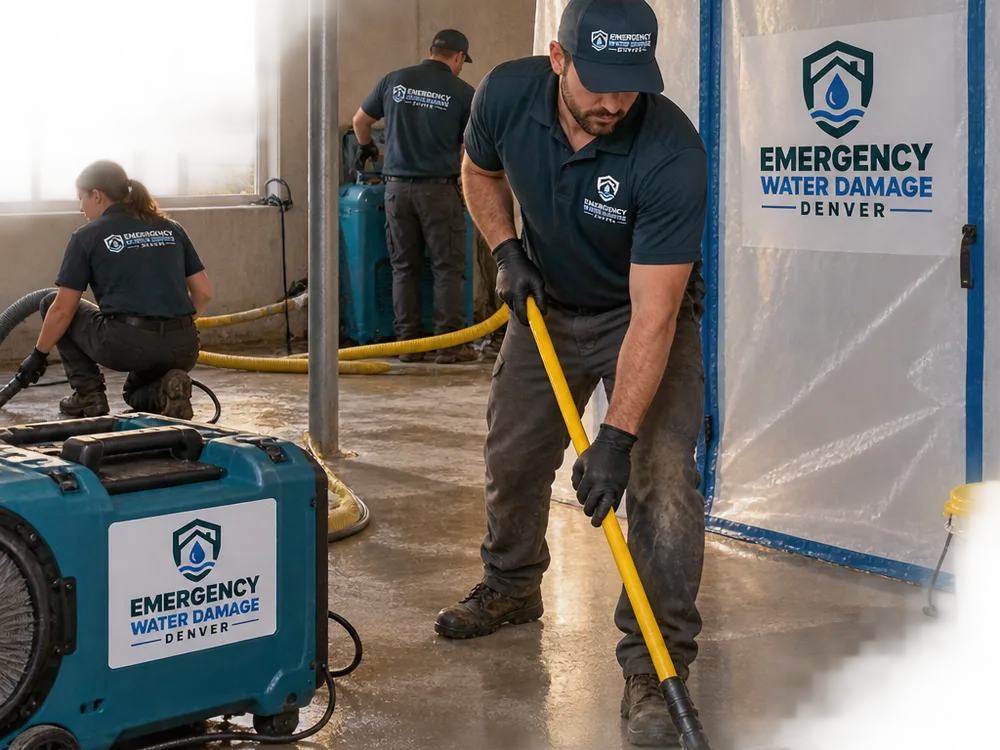
Standing sewage water is extracted first. Porous materials that cannot be reliably sanitized—often carpet pad, baseboards, drywall, and insulation—are removed to a safe cut line.
We clean visible soil, then apply hospital-grade disinfectants per label dwell time. This two-step approach is required for contaminated water losses.
Air movers and dehumidifiers dry structural materials. We track moisture so hidden damp areas do not turn into odor or microbial problems later.
Sewage odors can linger in framing, subfloors, and drains. We use targeted deodorizing methods after cleaning, not as a cover-up.
You get a written scope of what was removed, what was cleaned, and what still needs repair, so there is no confusion between cleanup and reconstruction.
Sewage cleanup is different from a clean water leak because the risk is biological, not just moisture. We treat the affected zone as a controlled work area.
First, we assess where sewage water traveled, including under flooring edges, behind baseboards, and into adjacent rooms. In Denver basements, seepage can migrate along slab edges or under floating floors, so the visible puddle is rarely the whole loss. Next, we set containment and establish a clean-to-dirty workflow so tools, boots, and materials do not cross-contaminate the rest of the property.
Removal is often necessary. If sewage contacted porous materials, standard practice is to remove them rather than try to “save” them. That commonly includes carpet and pad, damaged drywall low on the wall, and saturated insulation. After the physical removal, we clean and disinfect all remaining surfaces, then begin drying.
If you also have other moisture issues in the home, our water damage restoration team can coordinate drying and structural stabilization so the project stays organized and the indoor air stays safe during the work.
We help you identify immediate shutoffs and reduce further flow—for example, stopping water use, isolating fixtures, and keeping people and pets out of the area—while we prepare the work plan.
We inspect the affected rooms and adjacent areas to find where sewage traveled. We check typical hiding spots like behind vanities, under toilets, at floor transitions, and at baseboard lines.
We install barriers and, when conditions call for it, use HEPA filtration to manage airborne particles and odor during demolition and cleaning.
We remove standing liquid, then remove contaminated porous materials to a safe boundary so remaining structure can be cleaned and dried correctly.
We clean first, then disinfect with proper dwell time. Deodorizing comes after cleaning so the odor source is actually removed.
We dry the structure and track moisture until materials reach a stable, dry condition. You receive notes and photos that clearly show what work was completed.
Sewage cleanup in Denver typically ranges from about $1,500 to $6,500+, with small, contained incidents at the low end and larger basement or multi-room losses that require demolition, drying equipment, and odor work at the high end. A single bathroom overflow with limited spread is usually much less than a finished basement where carpet, drywall, and contents are affected.
Final pricing depends on how far contamination traveled, what materials must be removed, access—basement stairs and tight hallways take more time—how long the sewage sat, and whether drying and monitoring are needed. The exact cost is confirmed after an on-site inspection and written scope.
Call for Emergency Help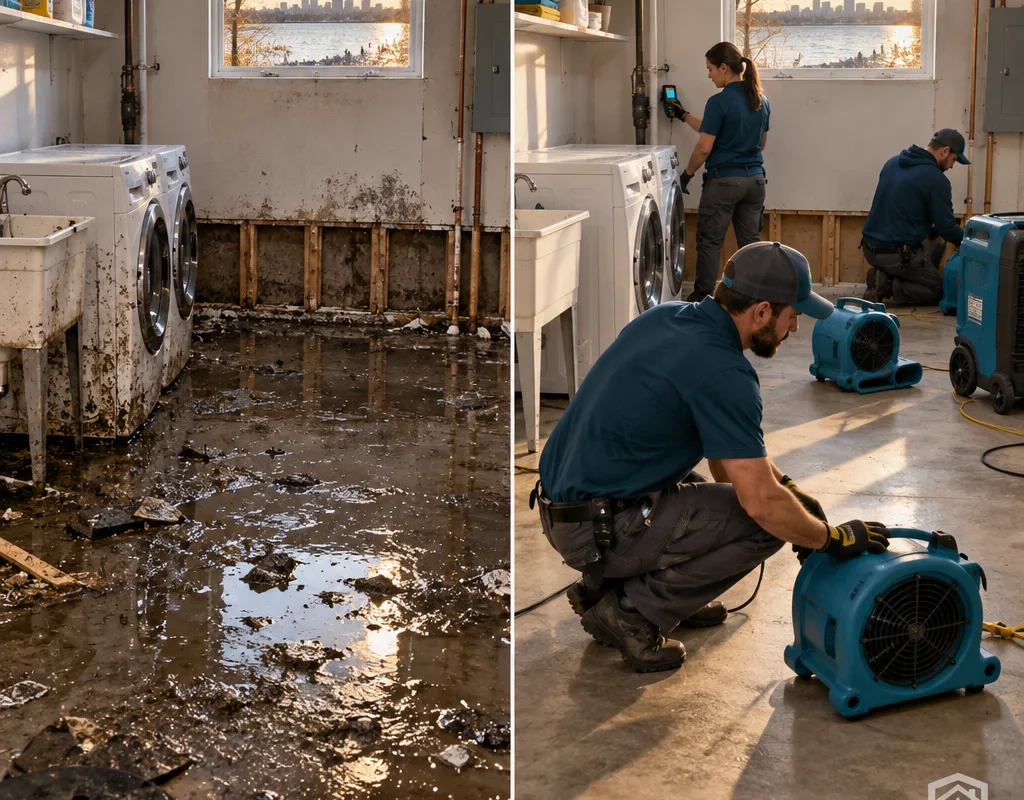
“We had a sewage backup in the basement and the smell was awful. They set up containment, removed the damaged flooring, and explained what could and couldn't be saved. The house felt safe again once the disinfection and drying were done.”
“They were direct about the biohazard risk and didn't try to shortcut the cleanup. The written scope helped a lot when we talked through repairs afterward.”
A small, surface-only mess can sometimes be cleaned, but a sewage backup that soaked carpet, drywall, or a basement floor should be treated as a biohazard and handled with professional containment, removal, and disinfection. In Denver homes with finished basements, contamination often spreads farther than it looks, including under flooring edges and into wall cavities.
Most sewage cleanup jobs take 1 to 3 days for containment, removal, and sanitizing, with drying and monitoring adding several more days when the structure is wet. The timeline depends on how many rooms were affected and whether porous materials must be removed to reach cleanable surfaces.
Keep people and pets out of the affected area, avoid running water or flushing if drains are backing up, and shut off HVAC to the contaminated zone if it is pulling odor or air from that area. If it is safe, take a few photos for documentation, then arrange an on-site assessment so cleanup starts before contamination spreads further.
Yes, when sewage contacts porous materials, removal is often the safest and most standard approach because disinfection cannot reliably reach deep contamination. We remove to a clear cut line, then clean and disinfect the remaining structure before drying.
It can if contaminated materials remain or if drying is incomplete, which is why deodorizing should follow proper removal, cleaning, and disinfection. When odor persists, we re-check common reservoirs such as subfloor seams, bottom plates, and drain areas to find what is still holding contamination.
Coverage depends on your policy and the cause of loss, and some plans require a specific endorsement for sewer or drain backup. We can provide a clear written scope and photos of affected materials so you have what you need to discuss the claim with your carrier.
Tell us what happened and what areas were affected. We will walk you through immediate safety steps, inspect the damage, and provide a written scope for containment, removal, and sanitizing.
Call for Emergency Help