We measure, then we dry
Drying plans are built around moisture readings in materials, not only what looks wet. That matters in kitchens, bathrooms, basements, and shared walls where water migrates.
Serving Denver, Colorado & surrounding areas
Rapid water extraction, drying, and cleanup for homes and businesses. Get a clear scope, moisture readings, and a plan that protects your property and timeline.
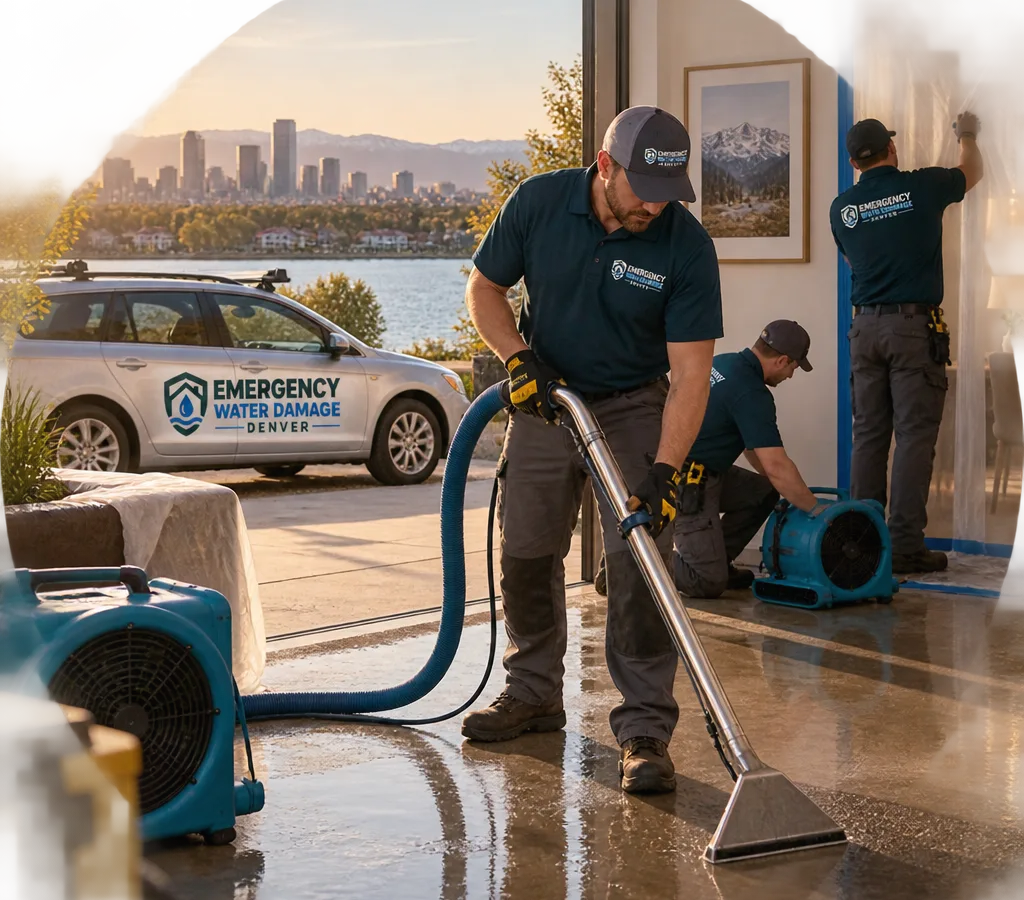
If you are searching for water damage cleanup Denver CO, you are usually dealing with one urgent problem: water is in places it should not be, and every hour raises the risk of swelling, staining, and microbial growth. Effective cleanup is not only removing visible water. It is finding where moisture migrated, drying building materials safely, and documenting conditions so decisions are based on measurements, not guesswork.
Emergency Water Damage Denver handles Denver water damage cleanup across the metro, including apartment units, single-family homes, storefronts, and light commercial spaces. Our team works like emergency water damage specialists serving Denver should: we show up ready to extract water, set drying equipment, check hidden cavities with moisture meters, and explain what needs to happen next before any demolition or rebuild work is discussed.
Most water damage cleanup Denver projects follow the same technical goals: stop the source, remove bulk water, control humidity, and verify drying progress with readings. In practice, the right steps depend on where the water went and what materials got wet.
Common parts of a professional water cleanup Denver visit include:
Denver homes vary widely. Basements in older neighborhoods like Capitol Hill and Washington Park often have finished spaces where water hides behind trim and under flooring. In Five Points and other areas with a mix of historic and renovated properties, we pay close attention to layered assemblies—old plaster, newer drywall, and multiple floor layers—because they change how moisture behaves and how drying should be set up.
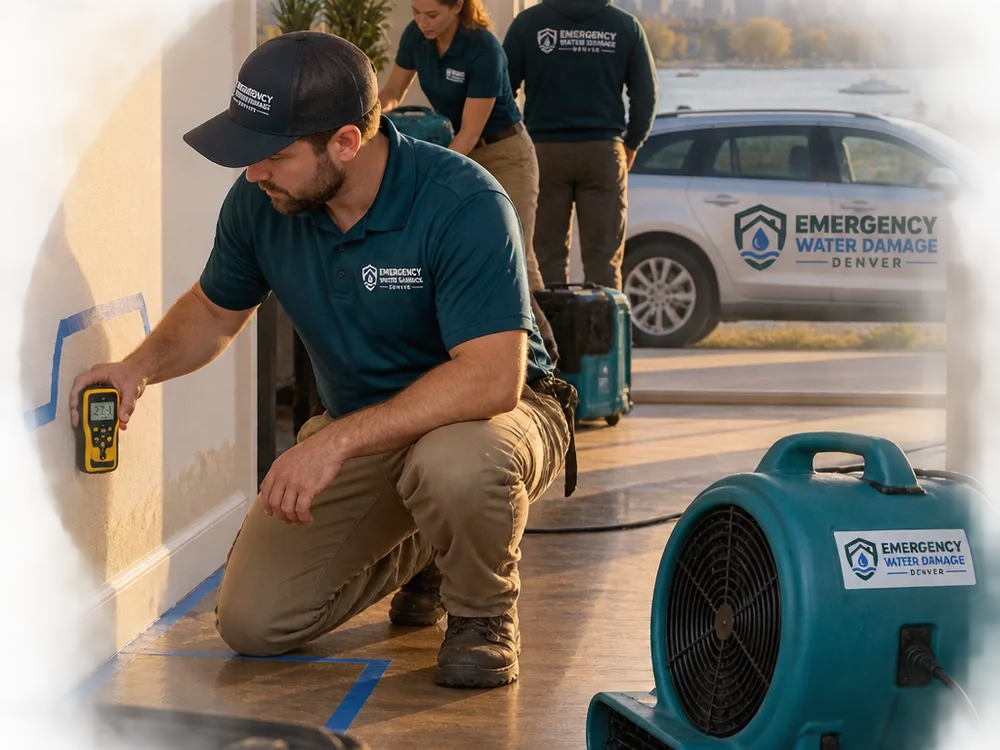
Drying plans are built around moisture readings in materials, not only what looks wet. That matters in kitchens, bathrooms, basements, and shared walls where water migrates.
If there is debris, odor, or suspected contamination, we can isolate the work area to keep the rest of the property usable and limit cross-draft spread.
A single room needs a different setup than a multi-room flood. Right-sizing air movement and dehumidification speeds drying and reduces the chance of secondary damage.
You get a plain-language explanation of what is wet, what can be saved, what must be removed, and what the drying timeline typically looks like for your materials.
We record affected areas and moisture conditions so you have consistent information for property management, insurers, or building stakeholders.
We confirm the water source is stopped and look for electrical or slip hazards. If fixtures or appliances are still leaking, we coordinate the immediate shutoff steps before drying begins.
We identify affected materials and boundaries, including adjacent rooms and lower levels when gravity-driven migration is likely. Moisture meters and thermal imaging, when appropriate, help verify what needs attention.
We remove standing water and extract from porous materials. The goal is to take out as much bulk water as possible before drying equipment does the slower work.
Air movers and dehumidifiers are placed for effective airflow and humidity control. We track progress with readings and adjust equipment placement as materials dry.
If drywall, insulation, pad, or other materials cannot be dried safely, we remove only what is necessary. If the water is contaminated or sat long enough to raise risk, we apply appropriate cleaning steps.
When readings show materials are dry to an acceptable level, we document the results and explain what repairs, if any, are next. Many clients use this handoff to coordinate with their chosen rebuild contractor.
Water damage cleanup in Denver typically ranges from about $900 to $4,500 for many residential situations, depending on how far the water spread and what materials were affected. A small, clean-water issue in one room can be closer to the low end, while multi-room losses, basement impacts, or situations requiring demolition and specialty drying can run higher.
Final price is driven by the category of water, the amount of extraction, equipment days, access, and whether drywall, insulation, or flooring must be removed. Exact cost is confirmed after an on-site inspection and moisture mapping.
Call for Emergency Help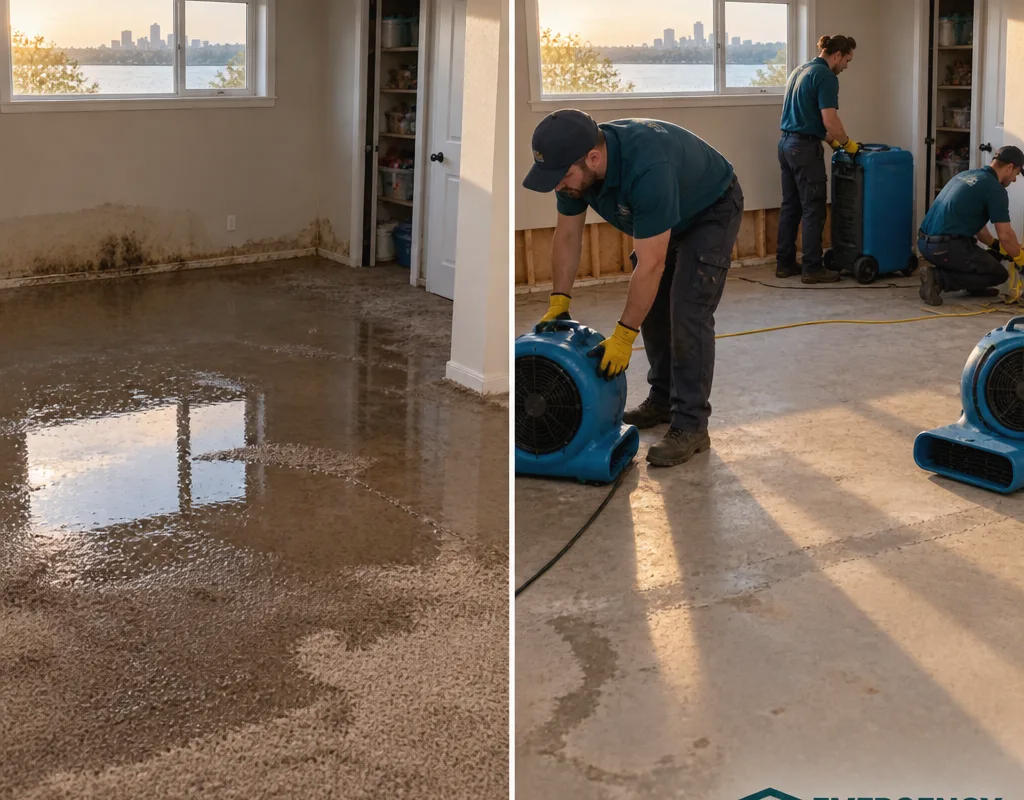
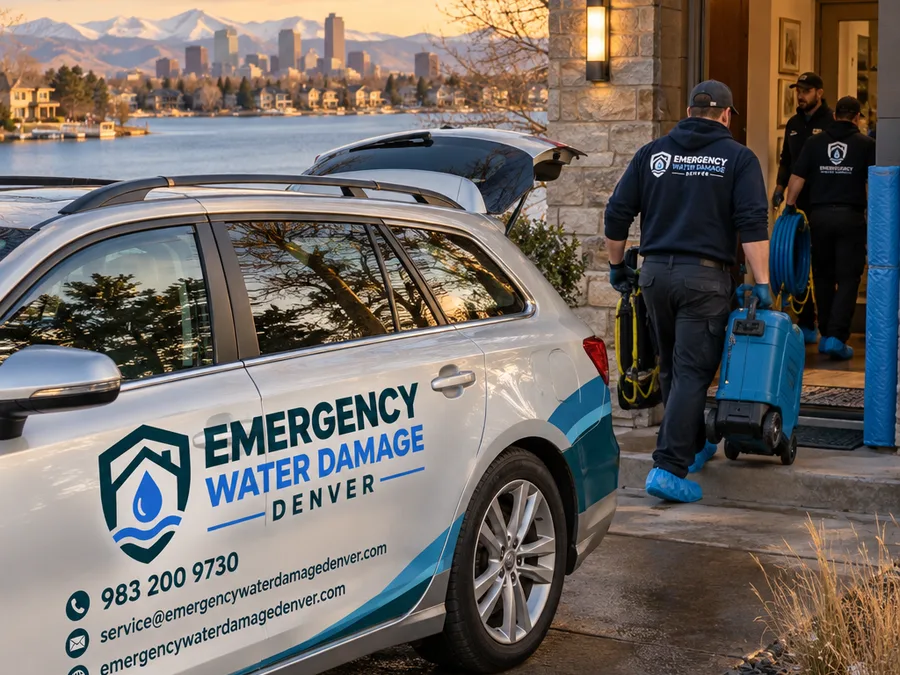
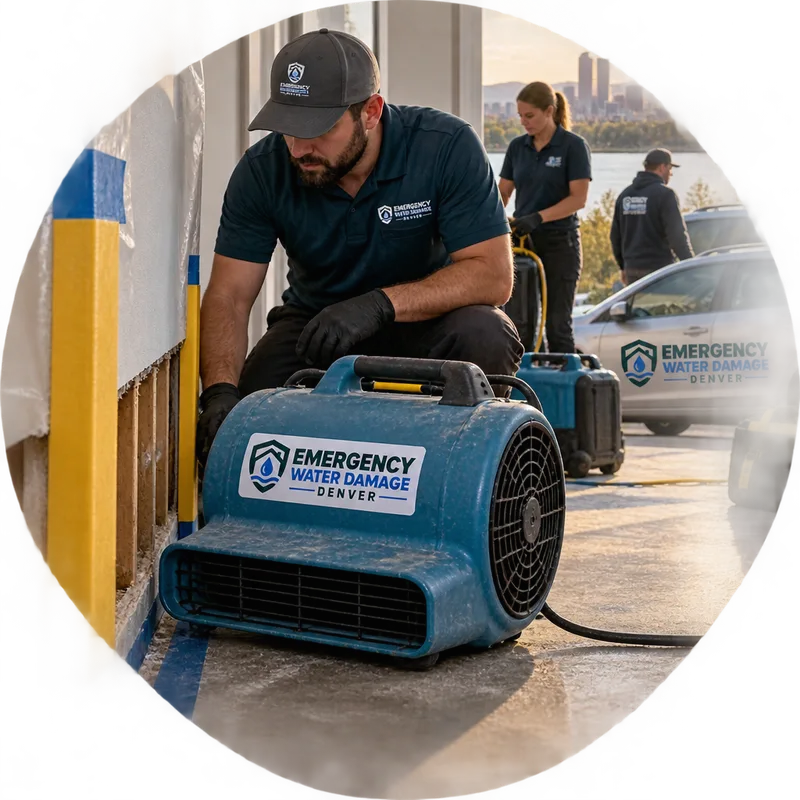
In urgent situations we prioritize same-day and after-hours response because fast extraction and drying reduces the chance of swelling, staining, and mold. The first visit typically focuses on stopping ongoing intrusion, removing standing water, placing equipment, and getting baseline moisture readings so drying can be monitored.
If it is safe, stop the water source and turn off power to affected areas where water is near outlets or appliances. Move small items off wet floors, avoid running HVAC if it could spread moisture or odor, and do not peel up flooring or cut drywall unless you are sure utilities are clear. Photos of the affected areas before heavy cleanup can also help with documentation.
Yes. Basement losses often need extra attention because water pools in low areas and can wick into baseboards, drywall, and floor assemblies. In neighborhoods with older housing stock and finished basements, we focus on moisture mapping beyond the visible water line so drying is aimed at the real wet boundaries.
Many dry-outs take about 3 to 5 days, but the real timeline depends on material type, how much water was absorbed, temperature, and airflow. Dense assemblies, wet insulation, and multiple layers of flooring can extend drying time, and we rely on moisture readings to confirm when materials are actually dry.
Yes, with the right safety controls and cleaning steps. Contaminated water requires containment practices, removal of affected porous materials that cannot be sanitized, and targeted cleaning and disinfection. We will explain what must be removed versus what can be cleaned based on the water category and where it traveled.
Sometimes. Materials that are swollen, delaminated, or contaminated often cannot be restored, and wet insulation can hold moisture and slow drying in wall cavities. We aim to save what can be dried safely and remove only what is necessary to reach dry, stable materials.
Yes. For condos and managed buildings, we can document moisture conditions, outline the affected footprint, and coordinate access constraints like parking, elevator rules, and quiet hours. Clear documentation helps speed decisions when multiple parties are involved.
Pricing starts with an on-site inspection, moisture mapping, and a written scope based on the affected materials and required equipment time. We explain what is driving the cost, what is optional versus required, and what changes the price, such as hidden spread behind cabinets or under flooring.
If water is spreading, smells are developing, or floors feel soft, it is time for a professional inspection and drying plan. Share what happened and what areas are affected, and we will guide you through the next steps.
Tell us where the water came from, what rooms are affected, and whether the water is clean or contaminated. We will schedule an inspection, provide a clear scope, and start the water cleanup and drying plan as quickly as the situation requires.
Call for Emergency Help