Burst or leaking supply lines
Pressurized line failures can saturate drywall, insulation, and flooring quickly. We focus on fast extraction, moisture mapping, and drying strategies that protect framing and subfloors.
Serving Denver, Colorado & surrounding areas
Fast response, careful drying, and repair work that protects your structure and finishes. Get a clear scope, photos, and straightforward pricing before materials are removed or rebuilt.
If you are searching for water damage repair Denver, you likely need two things quickly: stop the spread and prevent materials from failing later. Water moves through drywall seams, under baseboards, and into subfloors. What looks like a small stain can hide wet insulation, swelling trim, or moisture trapped behind cabinets.
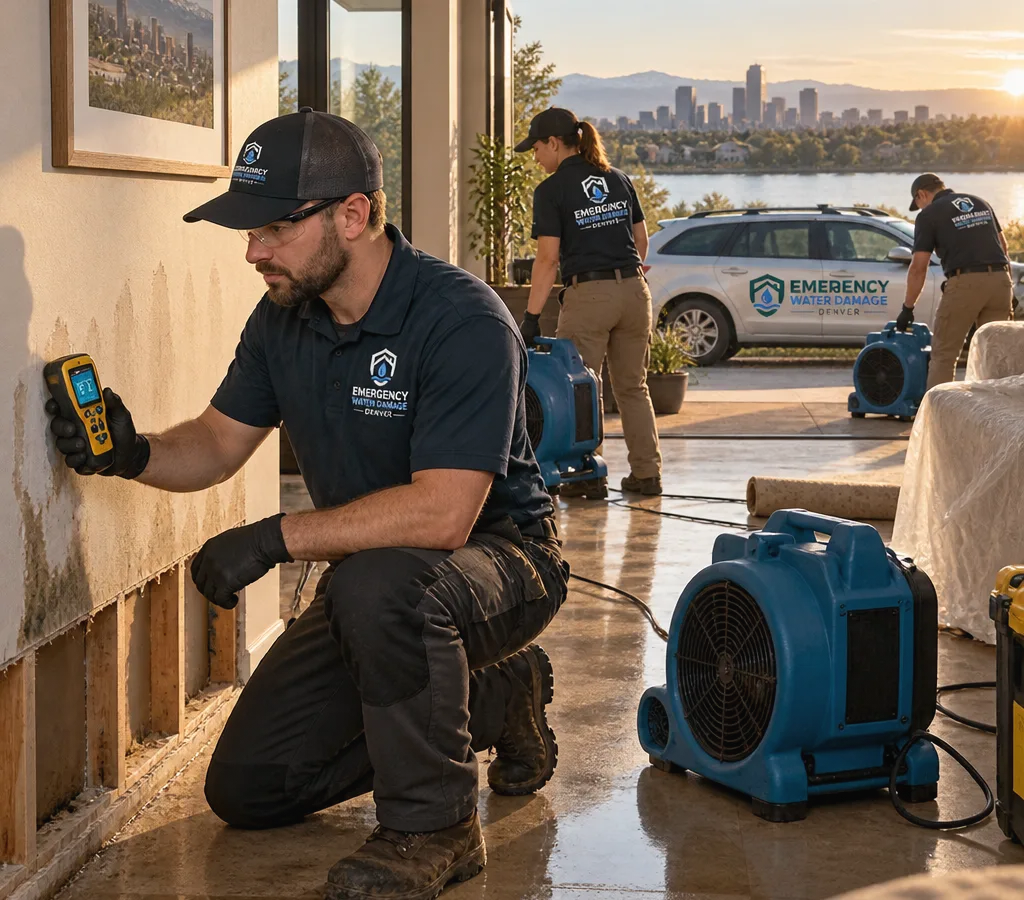
Emergency Water Damage Denver handles the full repair path after a water loss: onsite inspection, moisture mapping, controlled drying, and then targeted repairs to put the space back into use. We document what we find with readings and photos, explain which materials can be dried versus removed, and outline a plan that matches the type of water involved and how long it sat.
Our crew at Denver's local emergency water damage service focuses on practical triage first: protect floors, isolate affected rooms, and set drying equipment so moisture drops steadily instead of just blowing air around. Once moisture levels stabilize, we shift into rebuild and finish repair so the fix holds up through Denver's dry indoor conditions and big temperature swings.
A proper repair is more than swapping drywall. The goal is to return materials to a safe, dry condition, then rebuild only what needs rebuilding.
Typical scope for Denver water damage repair may include:
In older Denver homes, layered finishes and multiple remodel generations can hide paths where water traveled. That is why we trace moisture beyond the obvious wet spot before any rebuild starts.
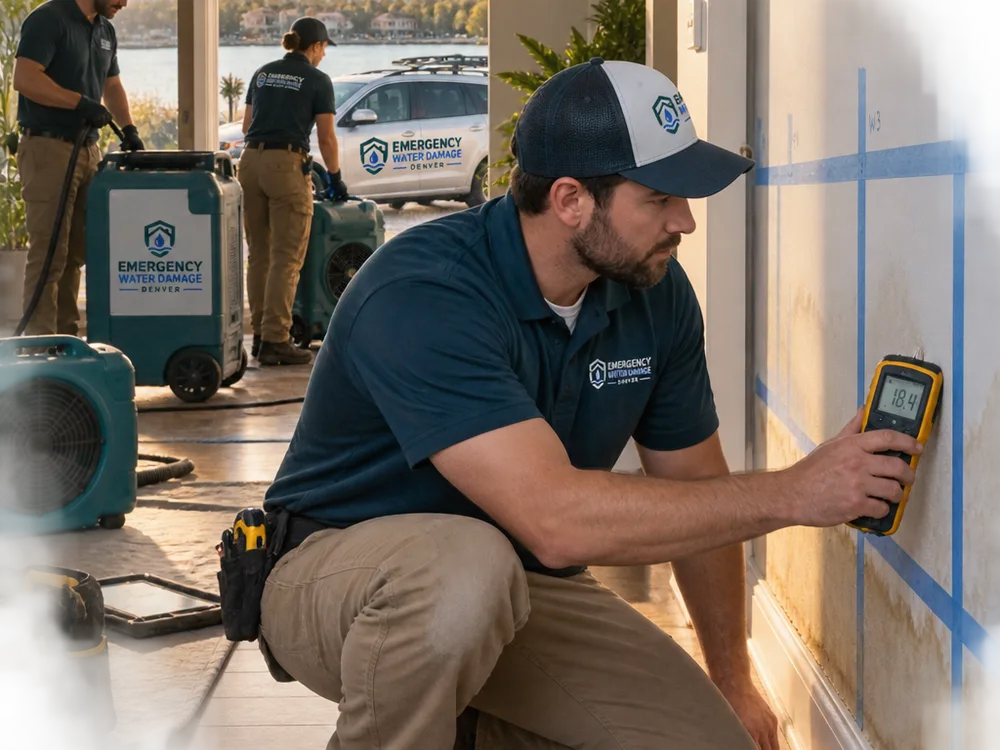
Pressurized line failures can saturate drywall, insulation, and flooring quickly. We focus on fast extraction, moisture mapping, and drying strategies that protect framing and subfloors.
Dishwashers, washing machines, water heaters, and refrigerator lines often leak into adjacent rooms. We check under flooring edges and behind cabinets where moisture gets trapped.
When contamination is possible, the plan changes: containment, removal of affected porous materials, and cleaning steps that match the water category before repairs begin.
Basements can hold moisture in framing and bottom plates. Drying plans often require targeted airflow and dehumidification so humidity does not linger behind finished walls.
Slow leaks can soak insulation and ceilings over time. We look for stained drywall, wet attic areas, and moisture that traveled along framing before patching finishes.
Condensate line clogs or chronic humidity can damage drywall and paint. We confirm the moisture source so repairs do not fail again.
We identify affected materials, take moisture readings, and note visible and hidden damage zones. You get a clear explanation of what is wet, what is at risk, and what is likely salvageable.
We protect contents and unaffected finishes, isolate the work area when needed, and address standing water or active leaks so the situation does not expand.
Equipment is placed for the materials involved, with airflow and dehumidification tuned to drive moisture down. We outline what will be monitored and what progress should look like.
If materials are swollen, delaminated, or contaminated, we remove in a controlled way. This keeps repair boundaries tight and helps prevent odor and future staining.
After drying targets are met, we move into repairs: drywall, trim, paint, and other affected materials. The goal is a functional, clean result that blends with surrounding finishes.
Water damage repair in Denver typically ranges from about $900 to $6,000+, depending on how far water traveled, the water category (clean vs contaminated), and how much demolition and rebuilding is required. Minor repairs after a small clean-water leak may stay near the low end, while multi-room drying with drywall and flooring replacement can land in the higher range.
Final price changes with moisture hidden behind walls, affected flooring type, cabinet involvement, access for equipment, and whether odor control or additional cleaning steps are needed. The exact cost is confirmed after an onsite inspection and moisture mapping so the scope matches what is actually wet.
Call for Emergency Help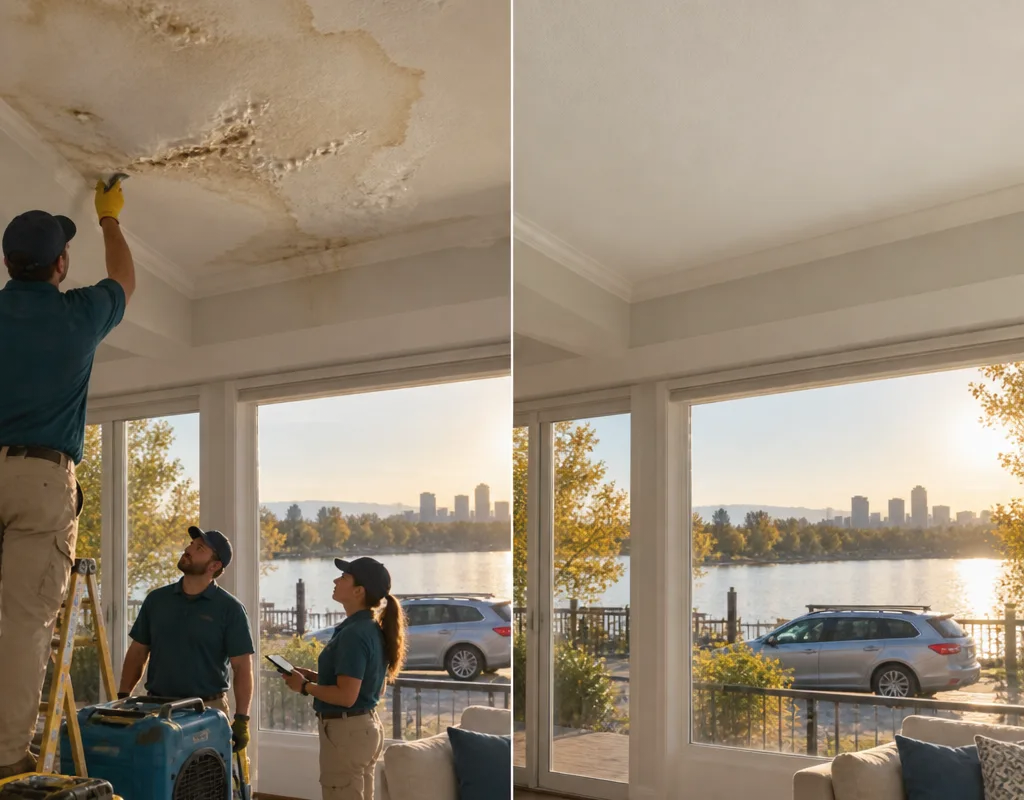
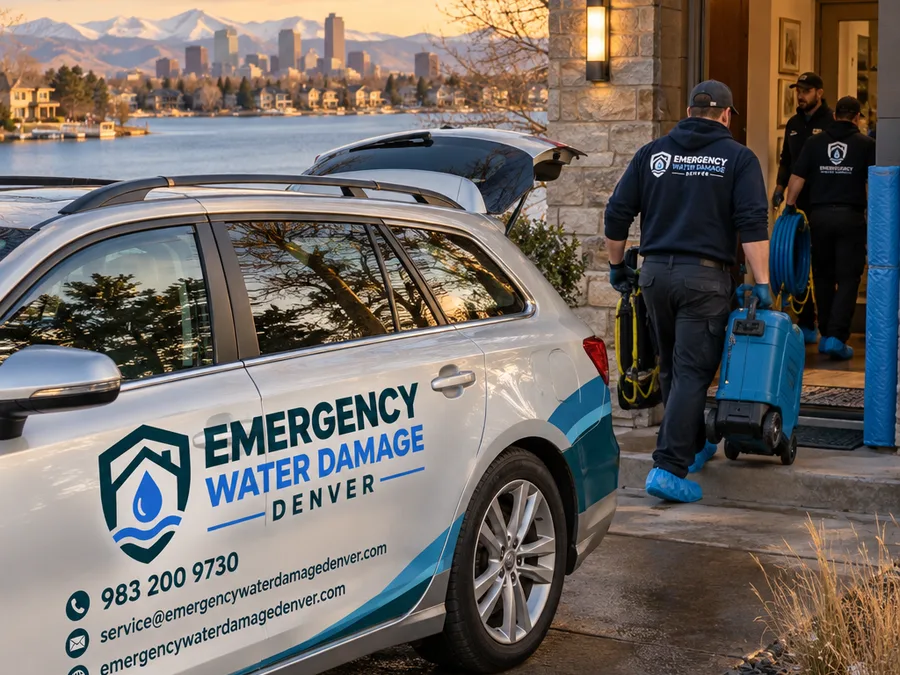
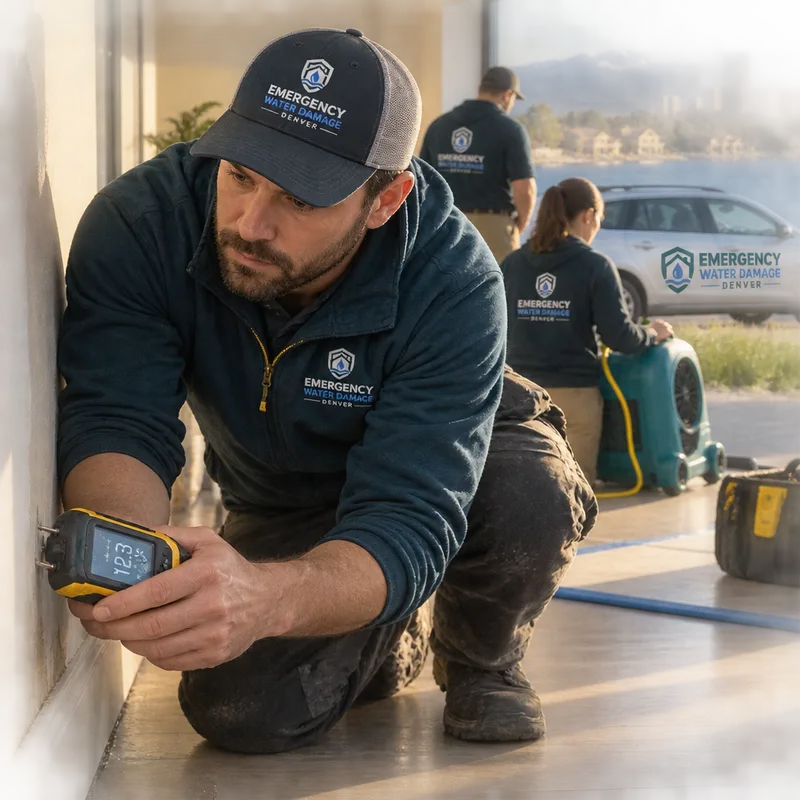
Denver properties vary a lot by neighborhood and building era, and that changes how water spreads and what repairs look like.
In Capitol Hill and Wash Park, you will see many older homes and multi-unit buildings where repairs can involve layered plaster or multiple prior renovations. Water can travel along framing bays and show up far from the source, so moisture mapping matters before patch work.
In Stapleton and Highlands Ranch, newer builds often have open layouts and engineered materials. A leak can move under floating floors or into adjacent rooms without obvious surface signs, which is why we check transitions, baseboards, and subfloor edges.
Along the South Platte River corridor and low-lying areas, basement moisture issues can combine with finished-wall systems. Drying is usually more successful when the wet zone is opened strategically rather than sealing moisture behind new paint.
Denver's dry climate can also be misleading: surfaces may feel dry while moisture remains in wall cavities or under flooring. We rely on readings and verified dry standards, not touch tests, before repairs are closed in.
If mold is already visible or you suspect it after a long-standing leak, the work may need a separate scope. In that situation, our team can coordinate the timing so drying and repairs do not conflict with mold remediation.
We prioritize urgent losses and can often begin with inspection and drying setup the same day, depending on current demand and access to the property. The first visit focuses on moisture mapping, immediate protection, and a drying plan so the damage does not expand while decisions are being made.
Not always; drywall can sometimes be dried in place when the water is clean, the wet area is limited, and readings drop predictably with proper airflow and dehumidification. If insulation is saturated, water wicked high, or contamination is involved, selective removal is often the safer choice so moisture does not stay trapped.
Stop the water source if it is safe, shut off electricity to wet areas if outlets or ceilings are involved, and move small valuables away from the wet zone. Avoid running household fans into wall cavities without a plan, since uncontrolled airflow can push moisture into adjacent materials.
Yes, finish matching is part of restoring the room so it looks consistent, especially for common drywall textures used in Denver homes. Exact paint matching depends on existing paint age and sun fade, so we explain options that range from a spot repair to blending into a full wall for a cleaner result.
Coverage depends on your policy and the cause of loss, but many sudden, accidental events like a burst supply line are commonly covered while long-term seepage may not be. We document moisture readings, photos, and the repair scope clearly so you have the information you need when discussing the claim.
Many drying projects take 3 to 5 days, but the timeline depends on the materials affected, how much water entered, and whether water is trapped under flooring or inside wall cavities. Repairs begin after moisture readings confirm materials are back to acceptable levels for closing and finishing.
Tell us what happened and what areas are affected. We will schedule an inspection, map the moisture, and give you a written scope so you can move forward with drying and repairs confidently.
Call for Emergency Help