Source control and safety first
We help isolate the water source when possible and check for hazards like wet electrical areas, swollen flooring, and contaminated water categories so the work starts safely.
Serving Denver, Colorado & surrounding areas
When water gets in, every hour matters. Get a clear plan for cleanup, drying, and repairs that protects the structure, prevents mold, and documents the loss for insurance.
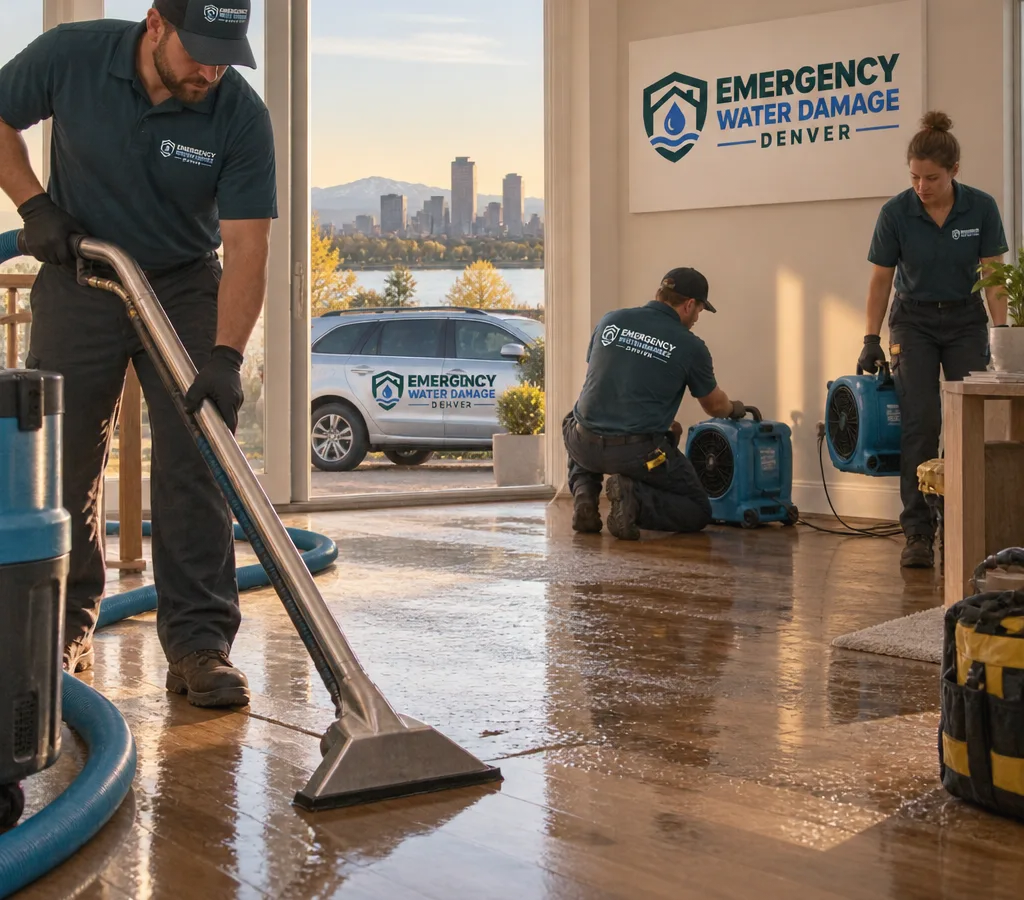
If you are dealing with flood damage Denver property owners usually need the same things right away: stop the spread, dry the structure correctly, and document everything. Water moves through flooring and wall cavities fast, and Denver's dry air can fool you into thinking materials are dry when moisture is still trapped in subfloors, insulation, and framing.
Emergency Water Damage Denver handles flood restoration Denver projects after burst pipes, appliance leaks, roof leaks, sewer backups, and storm-related water intrusion. Our approach starts with safety checks and a moisture-based plan, then we remove water, set drying equipment, and track progress with readings you can understand.
Our job as emergency water damage specialists in Denver is to stabilize your property first, then guide you through the restoration scope so you know what needs to happen now, what can wait, and what should be documented for the claim.
We help isolate the water source when possible and check for hazards like wet electrical areas, swollen flooring, and contaminated water categories so the work starts safely.
Fast removal of standing water reduces swelling and delamination in wood floors, baseboards, cabinetry, and drywall, and it shortens the drying window.
Air movers, dehumidifiers, and controlled containment are set based on the affected materials, room volume, and moisture readings taken over time.
When materials cannot be dried safely, we remove the right sections—for example, wet drywall or ruined pad—to expose cavities and prevent hidden mold.
After dirty water events, we clean and disinfect affected surfaces and contents as appropriate, then address odor at the source rather than masking it.
We capture photos, moisture logs, and a written scope so the carrier can see what was damaged and why specific drying and removal steps were required.
Denver properties see a mix of older housing stock and newer builds, and the materials behave differently when they get wet. In Capitol Hill and Washington Park, for example, you may find older plaster walls, layered flooring, and tight chases that hold moisture longer than you would expect. In Highland and Baker, remodel layers can hide multiple subfloor materials that dry at different rates.
Basements are a common trouble spot across the metro. Even a small amount of water can wick into trim, insulation, and the bottom edge of drywall. If drying equipment is not sized and placed correctly, the surface feels dry while moisture stays trapped behind baseboards or under floating floors.
We use moisture meters and thermal imaging as guidance tools, then confirm conditions with direct readings. That is how we decide whether drying is realistic or if selective removal is the safer option. The goal is a dry, clean structure you can rebuild on with confidence.
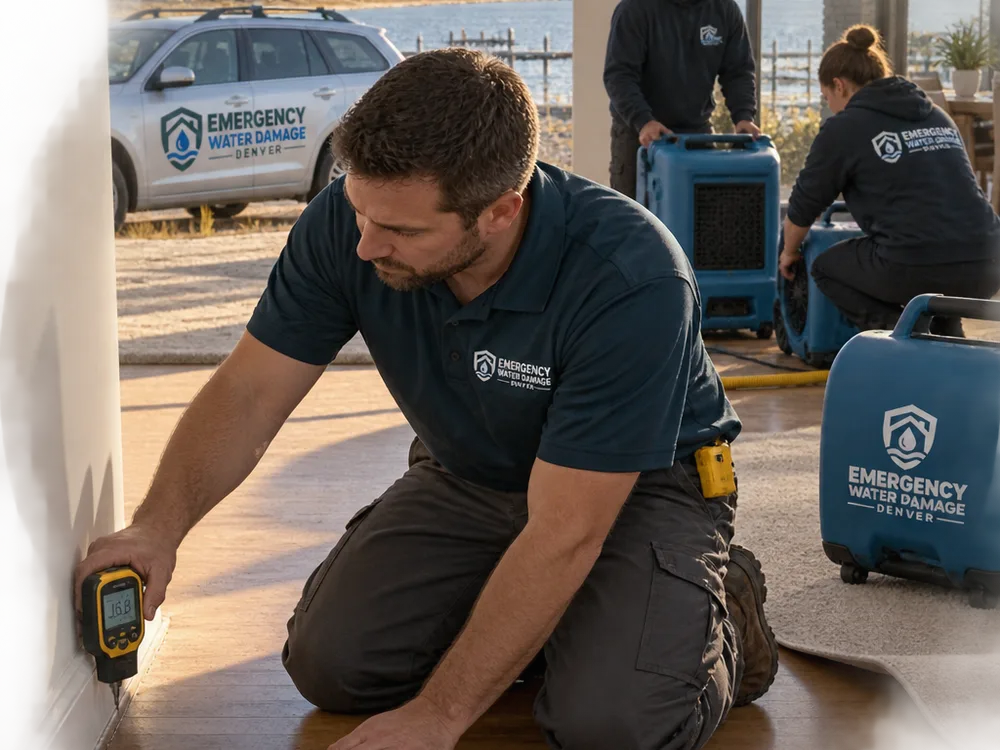
We ask a few fast questions to understand the water source and whether power, gas, or sewage contamination is a concern, then we inspect the affected areas and map moisture migration.
We extract standing water, pull wet pad when needed, protect unaffected areas, and set up containment if there is risk of cross-contamination or dust.
We place air movers and dehumidifiers based on the materials and the readings, then monitor moisture levels so equipment can be adjusted rather than left on autopilot.
We clean and disinfect where appropriate, remove unsalvageable materials responsibly, and keep drying in place until target moisture conditions are met.
You receive a clear scope of what was affected and what was done, plus guidance on rebuild sequencing. If a claim is involved, we help keep the information organized for the adjuster.
Flood damage restoration in Denver typically ranges from about $1,500 to $8,000 for many residential losses, with small contained events sometimes lower and multi-room or contaminated-water projects reaching $10,000+ depending on demolition and rebuild needs. A single wet room with clean water and minimal removal often lands in the lower range, while basement flooding with saturated drywall, flooring, and contents pushes costs higher.
Final price depends on the water category (clean vs. dirty), how far moisture traveled, affected materials (hardwood, tile, carpet, plaster), access to wall cavities, equipment days, and whether contents cleaning is needed. The only way to confirm a real number is an on-site inspection with moisture readings and a written scope.
Call for Emergency Help“A pipe burst while we were out. They arrived fast, got the water out of the basement, and explained what had to be removed versus what could be dried. The daily moisture checks made the whole process feel controlled instead of chaotic.”
“We had water spread under the flooring and into the walls. Their crew documented everything for insurance and kept the equipment setup neat and safe around our kids. No lingering odors after cleanup.”
Restoration should start as soon as it is safe to enter the property because water spreads under floors and into wall cavities quickly. Even if Denver feels dry, trapped moisture can stay in subfloors, insulation, and framing and create odor or mold risk, so early extraction and a measured drying plan matter.
Flood cleanup focuses on removing water, debris, and contamination, while flood restoration adds drying, monitoring, selective demolition, and documentation to bring the structure back to a safe, rebuild-ready condition. Most real flood restoration Denver projects include both because drying without proper cleaning—or cleaning without proper drying—leaves problems behind.
Sometimes drywall can be dried if it is only lightly affected by clean water and the cavity can be dried properly, but insulation often has to be removed once it is saturated. The decision should be based on water category, how long materials were wet, and moisture readings taken at the wall base and inside the cavity when accessible.
Not always, but it depends on the affected rooms, the water category, and whether containment or demolition is required. Many customers can stay in unaffected areas if pathways are safe and equipment can run, but sewer backups or extensive demolition often make temporary relocation the practical choice.
Many dry-downs take several days, but the timeline depends on how much water entered, what materials got wet, and how quickly extraction started. Concrete and dense assemblies can hold moisture longer than carpet and pad, so we rely on moisture monitoring rather than a fixed schedule.
Coverage depends on the cause of loss and your policy. Many policies treat sudden interior water events, like a burst supply line, differently than outside flooding, and sewer backup often requires a specific endorsement. We provide photos and moisture documentation that helps support the claim conversation with your carrier.
If water is spreading, materials are swelling, or you smell dampness days after the loss, it is time for a professional inspection and a drying plan based on real moisture readings.
Tell us what happened and what areas are wet. We will assess the loss, explain what can be saved, outline what must be removed, and document the work so you can move forward with repairs.
Call for Emergency Help