Rapid bulk water removal
We prioritize getting standing water out first, then transition immediately to drying so materials do not stay wet longer than necessary.
Serving Denver, Colorado & surrounding areas
When water is spreading, minutes matter. We remove standing water quickly, set up professional drying, and document conditions so you can make clean decisions about repairs.
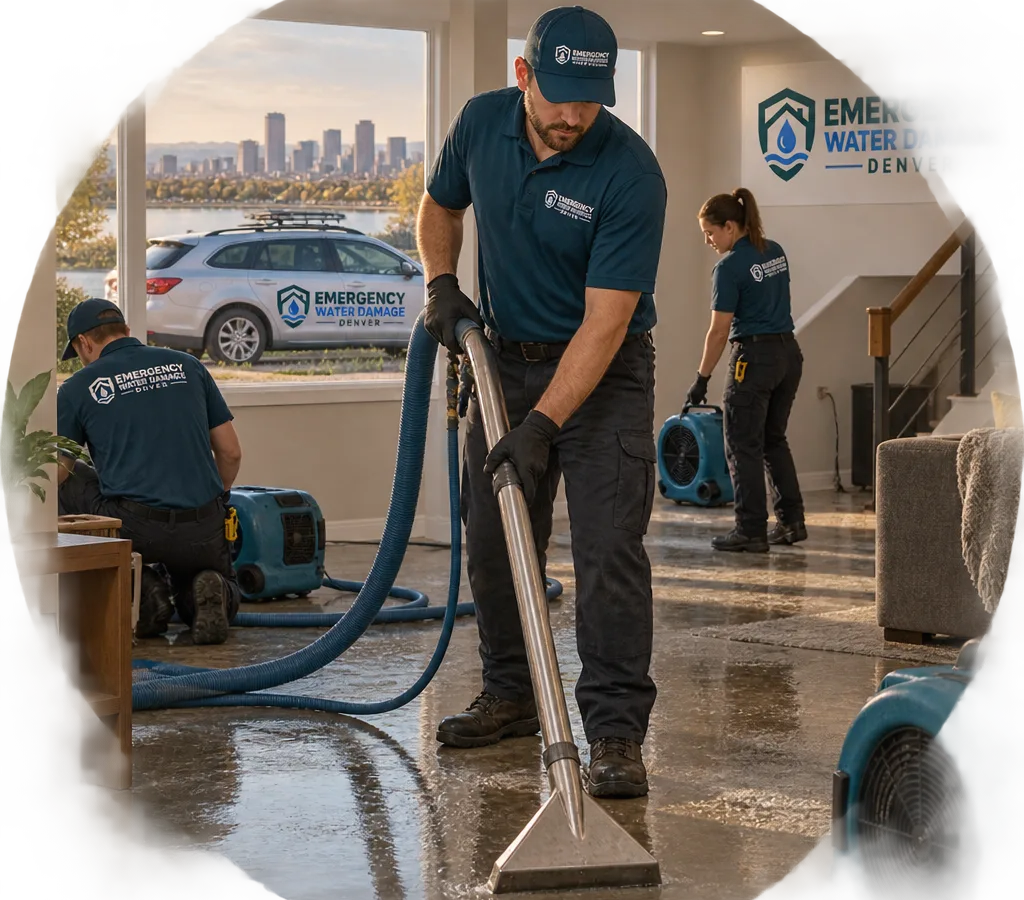
If you are searching for water extraction Denver CO, you likely need two things right away: the water out, and a plan that prevents the next wave of damage. Standing water wicks into baseboards, insulation, and subfloors. After that, moisture migration becomes the problem, and it can spread well beyond the original leak.
Emergency Water Damage Denver handles Denver water extraction for residential and commercial spaces across the city, including older homes near Washington Park and Congress Park where wood floors and plaster can absorb moisture fast, and newer builds in Stapleton/Central Park where water can travel through engineered flooring assemblies. We start by removing bulk water, then shift immediately into controlled drying and monitoring.
Our team of emergency water damage pros in the Denver area focuses on clear scope, safe work practices, and practical next steps based on what we see on site, not guesswork.
Water extraction is the rapid removal of liquid water from surfaces and building materials, followed by targeted drying to bring moisture levels back to a safe range. The exact approach depends on the source and how far water traveled.
Typical Denver water extraction work may include:
In Denver, forced-air heating systems and big day-to-night swings can change how moisture behaves indoors. That is why we rely on measurements and daily adjustments rather than leaving the same equipment running on autopilot.
We prioritize getting standing water out first, then transition immediately to drying so materials do not stay wet longer than necessary.
We track moisture levels in the materials that matter: subfloors, drywall, baseboards, and framing near the loss area.
Wet materials can be heavy and slippery. We keep pathways safer, control splashing and tracking, and work cleanly in lived-in spaces.
You get a straightforward explanation of what was affected, what was removed, what is being dried, and what may need repair after drying.
From older wood flooring and layered subfloors to finished basements, we adjust extraction and drying to the materials in front of us.
We inspect the affected rooms, identify the most likely water pathways, and take initial moisture readings so the drying plan matches what is actually wet.
We pump out deeper water when needed and use professional extraction tools for carpet, pad, and hard surfaces. If water is trapped under flooring or behind baseboards, we address access so drying can work.
Air movers and dehumidifiers are placed to create effective circulation. We also consider doors, vents, and room layout so moisture is driven toward dehumidification rather than into adjacent areas.
Drying is a managed process. We re-check moisture levels and adjust equipment placement or quantity as conditions change.
Once readings show the structure has returned to an appropriate dry condition, we review what can stay, what should be replaced, and what repairs may be needed next.
Water extraction in Denver typically ranges from about $300 to $1,200 for a small, contained issue, while larger losses with extensive standing water and multi-day drying commonly land around $1,500 to $5,000+. A simple wet carpet extraction is usually on the lower end; a flooded basement with heavy pump-out, pad removal, and significant dehumidification trends higher.
Final pricing depends on how far water spread, the materials affected—carpet pad, hardwood, drywall, or insulation—access constraints, and how many days of monitoring and equipment are required. The exact cost is confirmed after an on-site inspection and moisture readings.
Call for Emergency Help

If water is spreading or you are seeing swelling, bubbling, or musty odor, get a professional assessment quickly so the drying plan matches the real moisture conditions.
Call for Emergency HelpIn urgent situations we prioritize rapid response because standing water causes compounding damage. The fastest way to get an accurate arrival window is to call with your address, what happened, and where water is showing, such as the basement, first floor, or near a bathroom.
Water extraction removes the bulk water you can see, but most losses also need professional drying because moisture remains in carpet pad, subfloors, drywall, and framing. If you skip managed drying, materials can stay wet even when the surface looks fine, which can lead to odor and material failure.
We remove carpet pad when it is saturated and prevents drying, or when keeping it would trap moisture against the subfloor. In some cases carpet can be lifted and professionally extracted while preserving the carpet itself, but the right choice depends on contamination risk, duration of wetting, and measured moisture beneath the surface.
If it is safe, stop the water source and avoid using electrical outlets or walking in areas with standing water, especially near appliances. Move small valuables, papers, and electronics out of the wet area, and avoid running household fans indiscriminately if water may be contaminated because it can spread particles.
Yes, we can provide the documentation insurers typically ask for, including notes on affected areas, equipment used, and moisture readings over time. Coverage depends on your policy and the cause of loss, so we focus on clear documentation and scope.
Most controlled drying takes about 3 to 5 days, but timelines vary with how much water entered the structure, the materials involved, and whether water reached assemblies that dry slowly. We base the timeline on moisture readings, not on a fixed number of days.
Yes. Basement water extraction often starts with pump-out, then detailed extraction along edges and low points, followed by dehumidification and airflow planned around storage rooms, mechanical areas, and stairwells. Finished basements may also require selective material removal so hidden cavities can dry correctly.
Tell us what happened and where the water is showing. We will confirm next steps, arrive ready to extract, and set up a drying plan based on real moisture readings.
Call for Emergency Help