Water extraction and removal
We remove standing water and saturated debris using professional extraction tools, then set up containment and protection to limit tracking water through the home.
Serving Denver, Colorado & surrounding areas
Stop the spread of water damage fast with professional extraction, structural drying, and documentation that supports your next steps.
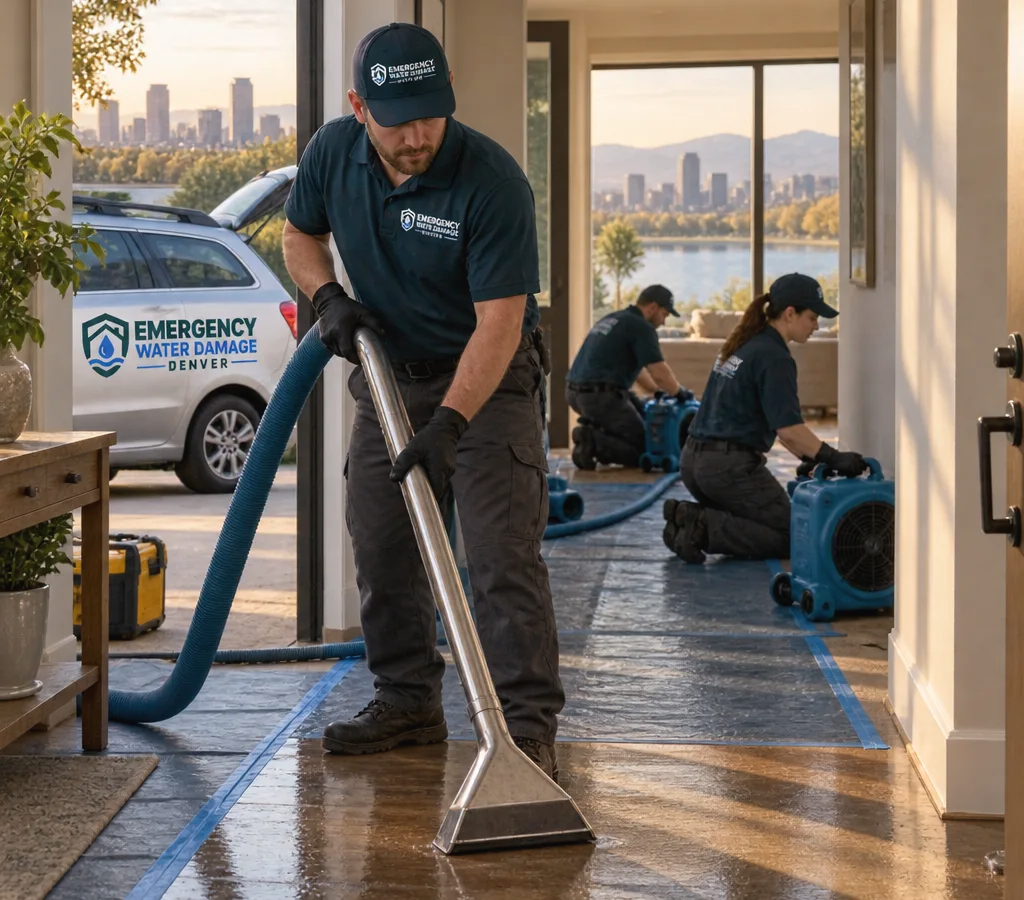
If you are searching for water mitigation Denver CO, you are usually trying to prevent a small problem from becoming a major rebuild. Water moves fast through drywall, baseboards, and subfloor seams, and it can wick up walls even after the visible puddle is gone. Proper mitigation focuses on three things: removing water, drying materials to a verified target, and controlling humidity so moisture does not migrate into adjacent rooms.
Emergency Water Damage Denver responds across Denver with the equipment and know-how to stabilize the situation: extraction, controlled structural drying, and monitoring with moisture meters and thermal imaging to locate wet areas that are not obvious. In older homes common around central Denver, trapped moisture behind plaster, tile backer, or under hardwood can linger unless the drying plan matches the building assembly.
You also need clean documentation and a clear scope. Our team keeps the process straightforward, explains what can be saved versus what must be removed, and notes readings and progress so you can make decisions with real data. If you are evaluating who to trust with the work, Denver's trusted emergency water damage team brings local response with trade-level discipline: protect what can be protected, remove what cannot, and dry the rest correctly.
We remove standing water and saturated debris using professional extraction tools, then set up containment and protection to limit tracking water through the home.
Air movers, dehumidifiers, and targeted drying are set based on material type and wet area size. Drying is verified with moisture readings, not guesswork.
When materials are too wet to dry in place, we remove only what is necessary to stop damage spread and allow proper airflow behind walls or under floors.
For clean-water losses we clean and treat affected areas to reduce odor and microbial risk. For contaminated water, the plan changes and safety steps increase.
We map affected areas, track drying progress, and adjust equipment placement as conditions change. This reduces the chance of hidden moisture remaining.
We document conditions, equipment, and readings so you have a clear record of what happened and what was done, which helps with property decisions and claims.
Water mitigation Denver is never one-size-fits-all. Denver's dry climate can help drying, but indoor conditions still matter. In winter, heating can drive very low indoor humidity while hidden cavities remain wet, which makes careful monitoring important. In summer, thunderstorms can introduce bulk water quickly and raise indoor humidity, so dehumidification strategy and containment matter.
Building type also affects approach. In Capitol Hill and Cheesman Park, you see a mix of older condos and vintage homes where water can travel through shared chases, stacked plumbing, and older assemblies. In Wash Park and Congress Park, hardwood and lath-and-plaster details can require a careful balance between drying speed and material protection. In Five Points and RiNo, remodeled spaces often combine old framing with newer finishes, which makes moisture mapping critical so the drying plan matches what is actually behind the surfaces.
Our goal in every water damage mitigation Denver project is the same: stop ongoing damage, dry to verifiable targets, and leave you with a clear picture of what comes next. That may mean drying in place, opening limited sections for access, or removing materials that cannot be restored safely.
We confirm the water source is stopped or controlled, identify any electrical or slip hazards, and set protection for flooring and walk paths.
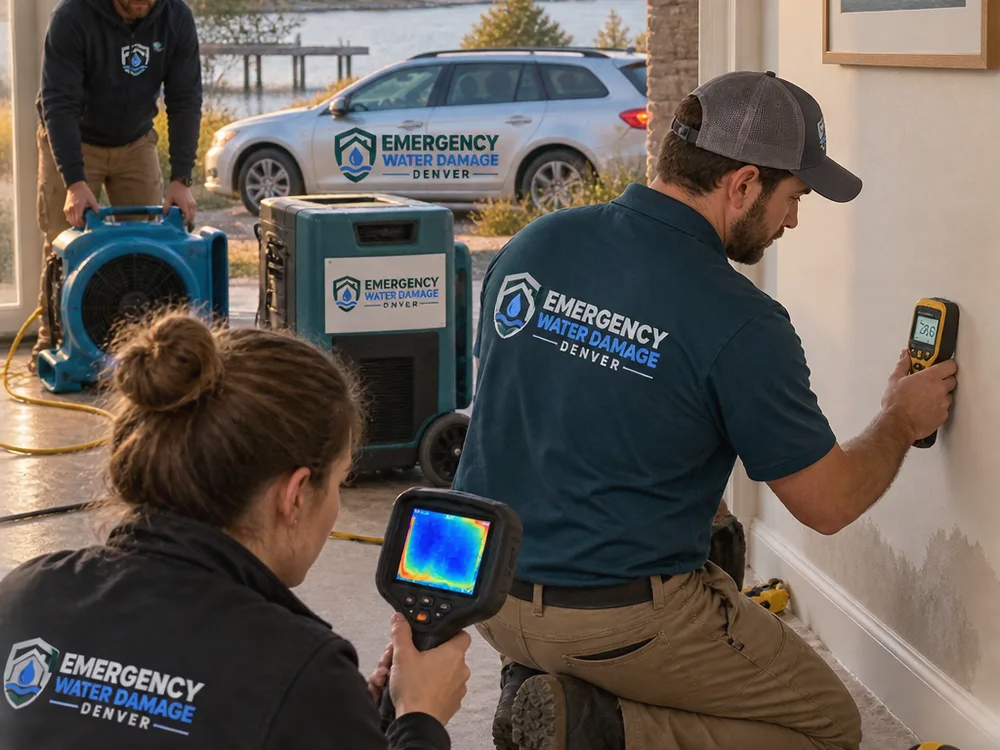
We inspect visible and hidden areas using moisture meters and thermal imaging, then outline what is wet, what is at risk, and what should be opened for access.
Standing water and heavily saturated materials are removed first. If drywall, insulation, or flooring cannot be dried appropriately, we recommend selective removal to prevent ongoing issues.
We place air movers, dehumidifiers, and filtration as needed based on room volume and material load, and we set containment when dust or cross-contamination is a concern.
Drying is checked with readings over time. Equipment is moved or resized based on progress so drying stays controlled and efficient.
Once target moisture levels are reached, we document final readings and walk you through what repairs are needed, if any, so you can plan restoration confidently.
Water mitigation in Denver typically ranges from about $1,200 to $6,500+, depending on how much water is present, how many rooms are affected, and whether materials need to be removed to dry the structure. Smaller jobs like a localized supply-line leak may fall closer to the low end, while multi-room losses with wet flooring, drywall removal, and extended drying run higher.
Final price is driven by the category of water (clean vs contaminated), total square footage and material types, how far water traveled into cavities, access (finished basements and tight mechanical areas take longer), and how many days of dehumidification and monitoring are required. Exact costs are confirmed after an on-site inspection and moisture mapping.
Call for Emergency Help“A pipe leaked overnight and we thought we had it handled after mopping up. Their tech found moisture behind the baseboards and under part of the wood floor, set drying equipment the same day, and kept checking readings until it was truly dry.”
“They explained what could be dried in place and what had to come out, with photos and notes that made the whole process easier to track. The crew was careful about dust control and protecting the rest of the house.”
If you have water in a wall, ceiling, or floor system, the right move is a moisture inspection and a drying plan before damage spreads into adjacent rooms.
Water mitigation should start as soon as the source is stopped because moisture can move into drywall, insulation, and subfloors quickly. Even in Denver's drier climate, hidden cavities can stay wet while the surface looks fine, so early extraction, dehumidification, and moisture mapping reduce the scope of removal later.
We dry in place when the material and water category allow it and we can verify progress with moisture readings; we recommend removal when materials are too saturated, contaminated, or blocked from airflow. For example, drywall that is wet at the bottom edge may need a controlled flood cut to allow airflow and prevent trapped moisture behind baseboards.
Mitigation is the stabilization phase: stop ongoing damage, remove water, dry the structure, and document conditions. Restoration is the repair phase that follows, such as replacing removed drywall, flooring, and finishes after the structure is dry and cleared for rebuild.
Yes. Appliance and supply-line leaks are common and often spread under flooring and into nearby walls before you notice. We focus on extraction, targeted drying under cabinets or floors when possible, and selective access openings when needed so the wet area is fully addressed.
If it is safe, stop the water source, shut off power to affected areas if outlets or fixtures are wet, and move small valuables out of the wet zone. Avoid running fans indiscriminately if the water may be contaminated, and do not assume a wet wall will dry on its own; trapped moisture is the main reason damage expands after the initial event.
Yes. We document the affected areas, equipment placement, and moisture readings so you have a clear record of what was found and what work was performed. Claim requirements vary by carrier, but clean photos and measured drying notes typically make the process easier to support.
Many drying cycles take about 3 to 5 days, but the real driver is how wet the materials are and how much airflow access we can create. A small, contained leak can dry faster, while water that traveled into multiple rooms, under hardwood, or into finished basement assemblies can take longer and may require limited removal for proper drying.
Tell us what happened and where the water is showing up. We will schedule an on-site moisture inspection, explain what needs to happen first, and provide a clear scope to stabilize the property.
Call for Emergency Help