Supply line or appliance failure
Burst washing machine hoses, leaking water heaters, and failed shutoff valves can run for hours, soaking carpet, drywall, and contents before anyone notices.
Serving Denver, Colorado & surrounding areas
Fast response for standing water, soaked drywall, and wet carpet. We remove moisture, dry the structure, and document the loss so you can move forward with repairs and insurance decisions.
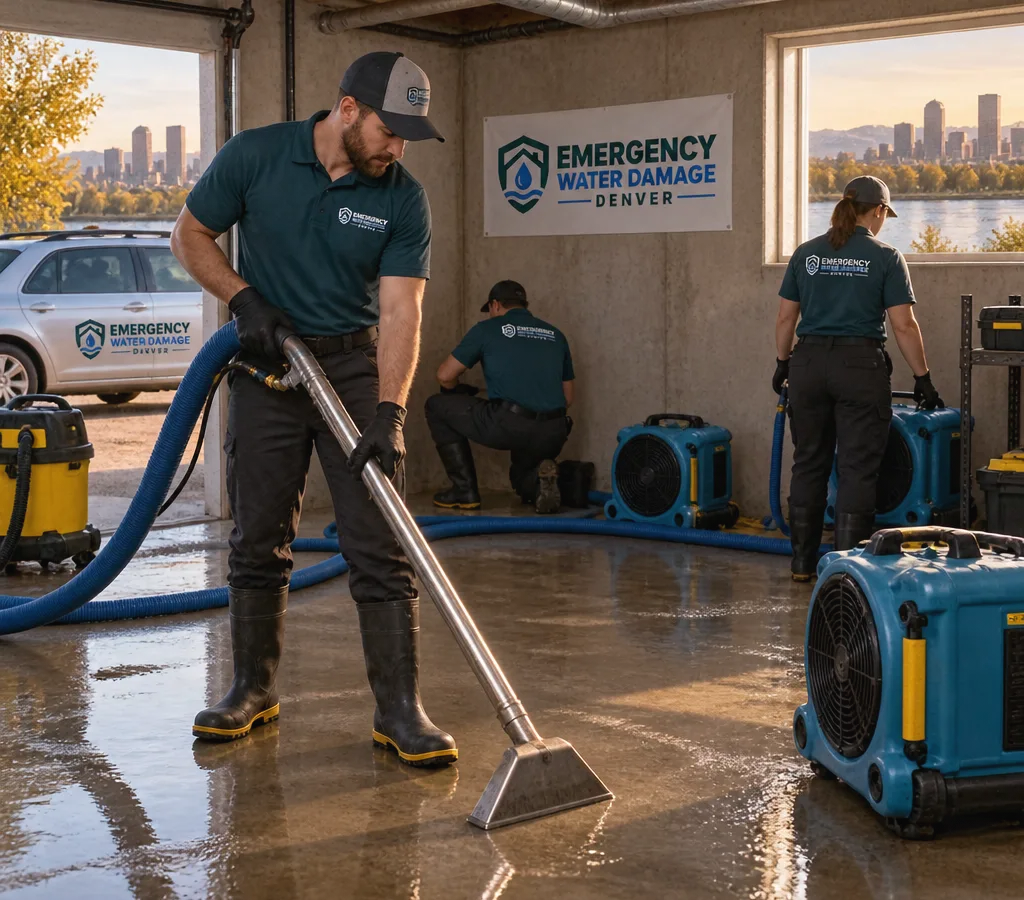
Denver basement flooding can turn from a wet corner to a full cleanup project quickly, especially when water reaches carpet pad, baseboards, or wall cavities. The first goal is safety and stopping the source, then getting water out before it wicks into materials and starts feeding odors and microbial growth.
If it is safe to do so, shut off the water at the source—such as a failed water heater, broken supply line, or overflowing sump discharge. Avoid outlets and extension cords on a wet floor. If sewage is present, treat it as contaminated water and keep people and pets out of the area.
Once the source is controlled, prompt extraction and drying matters. Water can migrate under floating floors, behind finished walls, and into insulation where it does not look wet from the outside. Emergency Water Damage Denver handles flooded basement Denver calls with a trade-style approach: inspection, moisture mapping, controlled demolition only where needed, drying and dehumidification, and clear documentation of what was wet and what was done. We are emergency water damage specialists in the Denver area, and we keep the process straightforward: stabilize the loss first, then plan the repair work.
Basement flooding cleanup is more than pumping water and setting a few fans. The goal is to dry the structure to an appropriate moisture level, prevent secondary damage, and leave you with a written scope you can use for decision-making.
What we typically do on day one:
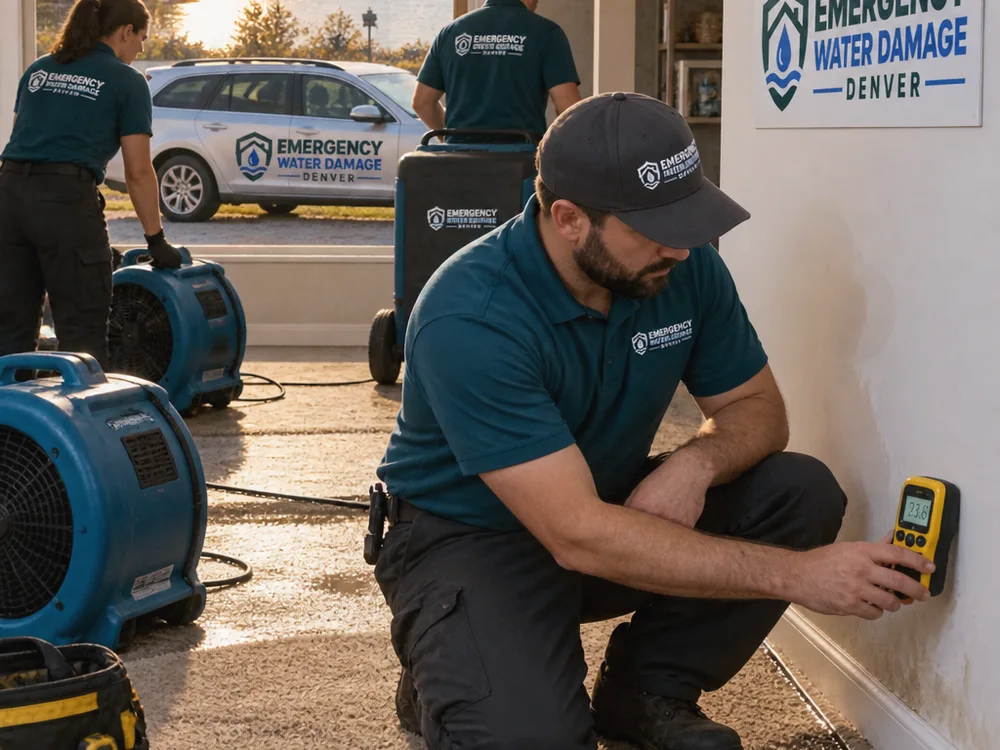
In Denver homes with finished basements, the tricky part is what you cannot see: wet sill plates, damp wall cavities, and moisture trapped behind built-ins. We use moisture readings to guide decisions rather than guessing, and we adjust equipment placement as the drying curve changes over the next couple of days.
Burst washing machine hoses, leaking water heaters, and failed shutoff valves can run for hours, soaking carpet, drywall, and contents before anyone notices.
Power loss, clogged discharge lines, stuck floats, or undersized pumps can lead to rapid water rise during storms. We document the affected area and dry the structure the same way, regardless of cause.
After heavy rain or fast snowmelt, water can push in through cracks, cove joints, or window wells. Even small seepage can soak trim and bottom plates.
If water comes up through a floor drain or shower, treat it as contaminated. Cleanup usually involves more careful containment and removal of porous materials that cannot be sanitized.
Basement window wells can fill and overflow, sending water across finished flooring. Early extraction and targeted removal helps limit how far the moisture spreads.
We identify the water category, take initial moisture readings, and note electrical or structural concerns. You get a clear explanation of what we found and what needs to happen next.
We pump and extract water, then address the places it hides: under carpet and pad, behind baseboards, and at the slab edge. Targeted removal happens only where drying is not practical or sanitary.
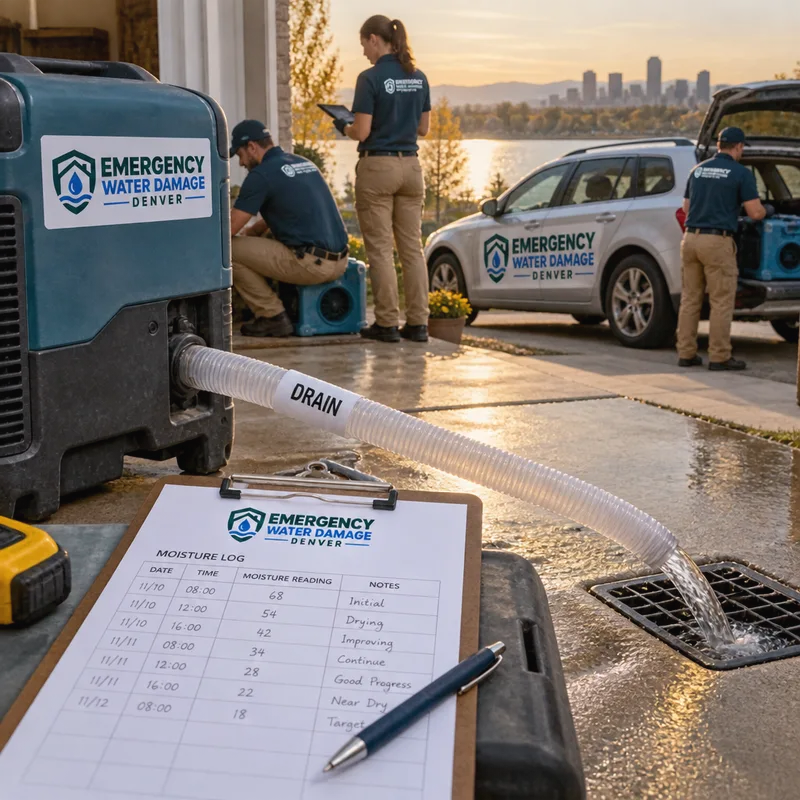
We place equipment to move air across wet materials and pull moisture out of the air. We monitor progress and adjust placement so the drying effort stays efficient.
We record affected materials, equipment in place, moisture readings, and drying progress. This documentation helps support an insurance claim when coverage applies.
After the area is dry, we outline what needs to be rebuilt or replaced, including drywall, trim, flooring, and paint. You can move forward with repairs with fewer surprises.
Denver basement flooding cleanup and drying typically ranges from about $1,500 to $6,500 for a small to mid-sized incident, while larger finished basements with widespread wet drywall, flooring removal, or contaminated water can run $7,500 to $20,000+.
Your final price depends on how far water traveled, how long materials stayed wet, water category, access to the basement, how much drywall or flooring needs removal, and how many days of dehumidification and monitoring are required. The exact cost is confirmed after an on-site inspection and moisture mapping.
Call for Emergency Help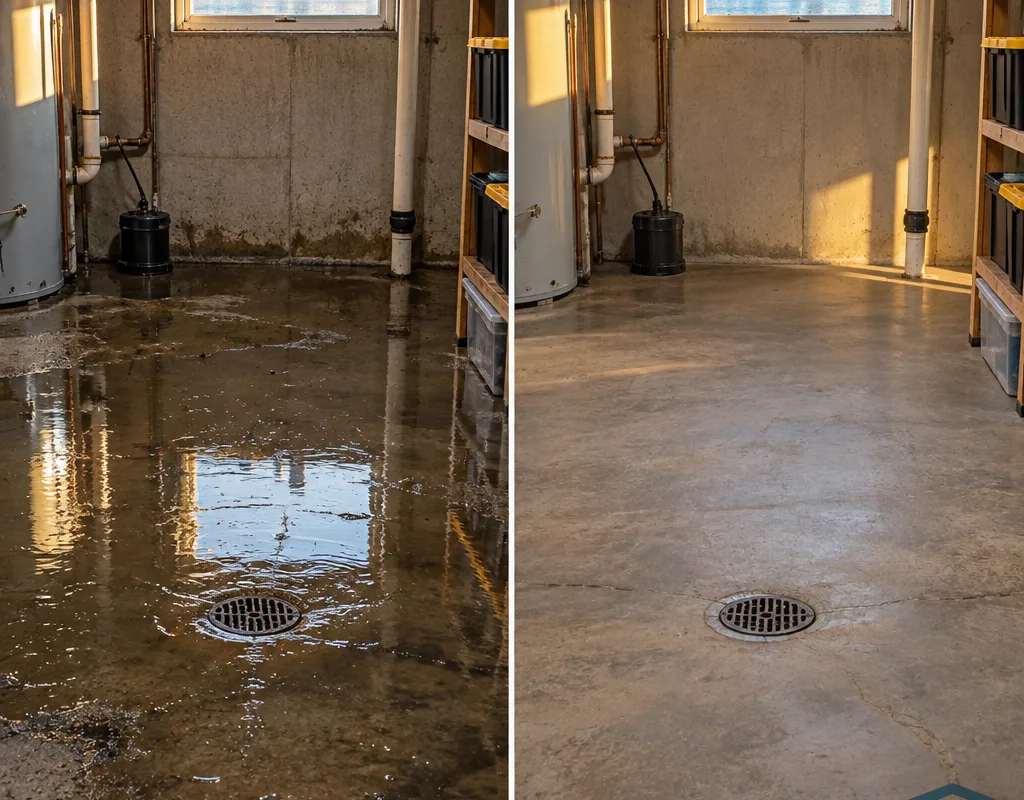
“We woke up to a flooded basement and the carpet was squishing. They got the water out fast, pulled only what had to be removed, and explained the drying plan each day. The moisture notes were helpful when we talked to our adjuster.”
“Our floor drain backed up and the smell was awful. The crew treated it like a contaminated loss, kept the mess contained, and the basement actually dried out on schedule. No lingering odor after repairs.”
Response time depends on current demand and weather conditions, but we prioritize active water intrusions because every hour affects how far moisture spreads into carpet, drywall, and framing. If you can safely stop the source and keep people out of the wet area, that helps us start with extraction and moisture mapping as soon as we arrive.
Not always, but drywall that has wicked water often needs to be cut out to dry the wall cavity and prevent swelling, staining, and odor. We base removal on moisture readings and water category, aiming for targeted cuts rather than tearing out full walls when it is not necessary.
Most drying projects take about 3 to 5 days, but timelines change with how long materials were wet, how saturated the carpet pad or framing is, and whether the water was clean or contaminated. We monitor progress and adjust equipment so drying stays on track instead of just waiting for time to pass.
Coverage depends on your policy and the cause of loss. Many policies treat sudden interior leaks, such as a supply line failure, differently than groundwater seepage or some types of backups. We provide photos, moisture readings, and a written scope so you have clear documentation to submit to your carrier when coverage applies.
Usually yes, as long as the affected area is contained and there are no electrical hazards or sewage contamination concerns. Drying equipment is loud and runs continuously, and doors may need to stay closed to keep airflow controlled. If we find contamination or significant microbial growth, we will explain precautions before work continues.
Carpet can sometimes be saved, but the pad often holds water and is commonly removed to dry the slab and prevent odor. Avoid running household fans without a plan because it can spread humidity through the home. We evaluate the carpet, pad, tack strips, and subfloor conditions and recommend the most practical path based on readings and water category.
Tell us what happened and when the water started. We will inspect the basement, map the moisture, and give you a clear cleanup and drying plan with documentation you can use for repair decisions and insurance conversations.
Call for Emergency Help